Article citation information:
Manafov, E., Guliyev, H., Huseynov, F. Modeling
and development of an intelligent electrical fault diagnosis system for
traction motors. Scientific Journal of
Silesian University of Technology. Series Transport. 2026, 131, 303-324. ISSN: 0209-3324. DOI: https://doi.org/10.20858/sjsutst.2026.131.17
Elshan MANAFOV[1], Huseyngulu GULIYEV[2], Farid HUSEYNOV[3]
MODELING AND DEVELOPMENT OF AN INTELLIGENT ELECTRICAL FAULT DIAGNOSIS
SYSTEM FOR
TRACTION MOTORS
Summary. This paper presents a fuzzy logic-based intelligent
diagnostic system for the real-time detection of electrical faults in traction
motors and the support of condition-based maintenance decisions. The proposed
approach evaluates the electrical condition of the motor through a
multi-criteria analysis of five key parameters: voltage, current, stator
temperature, insulation resistance, and magnetic field. The system demonstrates
stable diagnostic behavior under variable operating
conditions and sensor noise due to the use of a Mamdani-type fuzzy inference
algorithm and Gaussian membership functions. Based on the input parameters, a normalized
health indicator, referred to as the Electrical Technical Condition Index
(ETCI), is generated and used to estimate the remaining operating distance or
time before maintenance is required. The modeling was
performed in the MATLAB/Simulink environment and the decision output for
different operating modes was evaluated based on a knowledge base consisting of
243 linguistic rules. The simulation results indicate that, under the
considered modeling conditions, the proposed fuzzy
model provides stable output behavior, with RMSE and
MAE values of 0.065 and 0.051, respectively, and is suitable for real-time
diagnostic implementation. The proposed system supports the application of
Condition-Based Maintenance and Predictive Maintenance strategies by enabling
reliable operational assessment of the technical condition of the electrical
part of traction motors and has practical potential for use in real locomotive
operations. It should be noted that the present study is based mainly on
simulation modeling in the MATLAB/Simulink
environment. Therefore, the obtained diagnostic results should be interpreted
as simulation-based evidence of the applicability of the proposed fuzzy
diagnostic framework. Further validation using long-term operational data from
real traction motors and labeled fault cases is
required before full-scale industrial implementation.
Keywords: traction
motor, electrical faults, electrical technical condition, fuzzy logic,
intelligent diagnostics, real-time control
1. INTRODUCTION
Traction
motors are key components of railway traction systems, and their reliability
directly affects transport safety, energy efficiency, and service continuity.
Variable load regimes, high thermal effects, and long-term operating conditions
cause electrical faults in traction motors, such as insulation aging,
overheating of stator windings, phase current imbalance, and magnetic field
distortion. Failure to detect these faults promptly leads to sudden motor
failures, unplanned shutdowns, and reduced operational safety. Therefore,
reliable diagnostics and early fault detection in traction motors remain
important scientific and practical challenges [1- 2].
Traditional
diagnostic methods are mainly based on monitoring fixed threshold values and
periodic measurements and demonstrate limited effectiveness in real operating
conditions due to measurement noise, transient processes, and variable loads.
These approaches have limited ability to account for the nonlinearities and
uncertainties inherent in traction motor electrical subsystems, which restricts
their use in condition-based maintenance strategies.
In
this context, fuzzy logic-based diagnostic approaches offer robust and flexible
capabilities for processing imprecise and variable data. Rule-based fuzzy
inference systems facilitate the integration of expert knowledge and ensure
transparency of the decision-making process. The nonlinear and dynamic behavior of traction motor electrical parameters, including
voltage, current, stator temperature, insulation resistance and magnetic field,
makes fuzzy logic particularly suitable for this diagnostic task. These systems
allow for reliable detection of such faults in conditions of variability of
operating modes by describing smooth transitions between normal and emergency
states and create an effective methodological basis for condition-based
maintenance strategies.
The main scientific contribution of this study is the development of a quantitative and decision-oriented fuzzy logic framework for diagnosing electrical faults in traction motors. The innovation is determined by the following main points:
§ The transformation of
multi-parameter fuzzy diagnostic results into a normalized “Electrical
Technical Condition Index (ETCI)” indicator in the interval [0-1] is ensured,
which allows for an integral assessment of sensor data with different units of
measurement in real time.
§ The fuzzy outputs are directly
linked to maintenance decisions (continuation of operation, planned repairs,
protection) and the diagnostic results are integrated into the Condition-Based
Maintenance (CBM) mechanism.
§ The fuzzy knowledge base and
membership functions are formed based on the real operating ranges of a
specific 6FRA 4567 H traction motor, which makes the model suitable for
industrial applications rather than laboratory ones.
§ The use of Gaussian membership
functions increases diagnostic stability in the presence of sensor noise and
uncertain operating modes, preventing decision jumps.
At
the same time, the study is positioned as a simulation-based methodological
contribution. The proposed system is intended to demonstrate the feasibility of
combining multi-parameter fuzzy diagnostics with a normalized electrical
technical condition index. Its practical application requires further testing
under real locomotive operating conditions, including long-term sensor
measurements, maintenance history, and confirmed fault records.
The
proposed approach created a structural framework that enables the use of
diagnostic results as a key indicator for predictive maintenance (PdM) systems.
2. LITERATURE
REVIEW AND PROBLEM STATEMENT
Electrical fault diagnosis in
traction motors is an important research area for improving the reliability of
railway transport systems. Traditional diagnostic methods are mainly based on
deterministic threshold values and signal analysis methods such as multispectral
current analysis, vibration diagnostics, and insulation resistance measurement.
Although these approaches can detect certain types of faults, their
effectiveness is limited under nonlinear dynamics, variable load conditions,
and stochastic disturbances typical of traction motors
[3-6].
In recent years, intelligent
diagnostic methods have been widely studied to overcome these limitations.
Artificial neural networks, support vector machines, and deep learning models
have shown high fault classification accuracy in many diagnostic applications.
However, their dependence on large labeled datasets
and their limited interpretability can restrict their application in
safety-critical systems [7-9].
Hybrid approaches combining signal
processing and intelligent algorithms have also been developed. The integration
of machine learning with time-frequency analysis has yielded effective results
in rotor and stator fault detection. However, these methods require high
computational resources and complex feature extraction steps [10-13].
In this context, fuzzy logic-based
diagnostic systems are of particular interest due to their noise immunity,
interpretability, and the ability to integrate expert knowledge. The
effectiveness of fuzzy systems in power systems and electrical machine diagnostics
has been confirmed in a number of studies. In particular, Mamdani-type fuzzy
inference systems are dominant in industrial applications due to the
transparency of the decision-making mechanism [14-16].
An analysis of existing studies
(Table 1) shows that fuzzy logic allows for a more accurate assessment of the
situation in dynamic operating conditions dominated by nonlinearities and
uncertainties. However, there is limited work on the integration of fuzzy
diagnostics with residual operating resource prediction. Another limitation of
many existing studies is that diagnostic models are often validated using
laboratory data, simulated signals or limited experimental datasets. As a
result, their direct transfer to real traction motor operation remains
challenging. This is especially important for railway traction applications,
where the diagnostic decision is influenced by load variability, sensor
uncertainty, thermal inertia, insulation ageing and maintenance history. This
indicates the need to develop multi-parameter diagnostic and prognostic systems
based on fuzzy logic for real-time monitoring of traction motors and
optimization of maintenance.
Tab. 1
Comparative table of the proposed system with
existing fuzzy logic-based diagnostics systems for traction motors
|
Comparison
criteria |
Existing fuzzy logic-based traction motor
diagnostics |
Proposed
system |
|
Diagnostic purpose |
Discrete fault detection |
Integrated
assessment of the electrical technical condition |
|
Number of input parameters |
1-3
parameters (mainly current, vibration, or temperature) |
5 electrical parameters |
|
Parameter integration |
Discrete fuzzy decisions |
Normalized
ETCI in the range [0-1] |
|
Output format |
Qualitative (normal/fault) |
Quantitative
health index + decision class |
|
Real traction motor application |
Often laboratory motors |
6FRA 4567
H real traction motor |
|
Operating conditions |
Fixed or ideal models |
Variable, real operating ranges |
|
Membership functions |
Mainly triangular/trapezoidal |
Gaussian,
S and Z type (noise-robust) |
|
Sensor noise immunity |
Limited |
Improved
through smooth transitions (smooth transitions) |
|
Decision mechanism |
Limited to diagnostics |
Direct
decision output for CBM and PdM |
|
Repair planning |
Not considered |
Diagnostics-based planning |
|
RUL / residual resource connection |
Typically absent |
Structurally available (ETCI-based) |
|
Real-time mode |
Partial |
Suitable
for real-time implementation |
|
Practical applicability |
Average |
High (for locomotive systems) |
3. THEORETICAL
FOUNDATIONS OF DIAGNOSTICS OF ELECTRICAL FAULTS
Diagnostics of electrical faults in traction motors is based on the
analysis of the main parameters characterizing electromagnetic, thermal, and
insulation processes. Deviations from normal operating conditions are reflected
in these parameters and may indicate the development of electrical faults.
Stator voltage is one of the main parameters characterizing the electromagnetic
operating mode of the motor. Deviation of the supply voltage from the nominal
leads to a decrease in the electromagnetic moment, an increase in current,
local heating of the windings, and accelerated aging of the insulation.
Therefore, the analysis of the amplitude and dynamic changes of the voltage is
important for the early detection of power supply and internal motor faults.
Stator current is one of the most informative diagnostic signs of
electrical faults. Exceeding the nominal current is associated with
inter-winding short circuits, phase symmetry violations, overloads, and
deterioration of cooling conditions. The transient and stationary components of
the current are closely correlated with the technical condition of the motor
and allow faults to be identified at an early stage.
The temperature regime is one of the main factors determining the
reliability of insulation. An increase in stator temperature may be caused by
excessive current, magnetic losses, cooling system degradation or local
insulation defects. Since the increase in temperature significantly reduces the
service life of the insulation, temperature monitoring plays an important role
in assessing the condition of the motor.
Insulation resistance is an important early-warning indicator of
insulation degradation and moisture penetration. A decrease in resistance
provides an early warning of insulation aging and the formation of short
circuits in the windings. A change in the magnetic field in the interpole gap
reflects the symmetry of the magnetic field, the eccentricity of the rotor, and
defects in the magnetic system. Magnetic field analysis allows for earlier
detection of some faults than traditional electrical measurements.
Table 2 shows the normal, permissible, and emergency ranges of the
selected input parameters for assessing the technical condition of the
electrical parts of the traction motor. It should be noted that the given
values were obtained as a result of measurements in real conditions for 6 FRA
4567 H-type traction motors of Alstom's AZ4A and AZ8A electric locomotives.
Tab.
2
Allowable, Warning and Dangerous value ranges of
input parameters
|
Allowable |
Warning |
Dangerous |
|
|
Voltage |
U <1400 V |
1400 -1540 V |
U > 1540 |
|
Current |
I < 550A |
550 - 605 A |
I > 605 |
|
Stator temperature |
t < 100°C |
100-120°C |
t > 120°C |
|
Insulation resistance |
R >1 MOhm |
1-0.5 MOhm |
< 500k Ohm |
|
Magnetic field |
B < 0.5 T |
0.5-1.2 T |
B > 1.2 T |
The selected parameters directly affect the service life and operational
safety of the traction motor. Their joint analysis allows for a comprehensive
description of the motor condition and the identification of interconnected
faults that cannot be detected by a single parameter. The selected indicators
reflect the main characteristics of the machine's operation, and even small
deviations are considered informative for the detection of early defects. The
parameters can be measured non-invasively with standard sensors and, since they
have a continuous, fuzzy boundary between normal and emergency modes, are
suitable for processing with fuzzy systems. Thus, these parameters serve as
reliable input variables for intelligent diagnostic systems [16-20].
3.1.
Architecture and methodology of the intelligent diagnostic system
The diagnostic system includes the following functional subsystems:
§ Data acquisition module: collects
voltage, current, stator temperature, insulation resistance, and magnetic field
data.
§ Signal preprocessing block -
performs normalization of input data, noise filtering, and scaling.
§ Fuzzy Inference System (FIS) -
converts input parameters into an assessment of the technical condition of the
motor.
§ Technical condition assessment
module: generates the Electrical Technical Condition Index (ETCI) in the range
[0-1].
§ Remaining distance predictor:
converts the ETCI value into an estimate of the remaining operating distance
before maintenance.
§ Monitoring interface - provides
visualization of results for maintenance personnel.
The structural scheme provides a continuous flow of information and the
application of diagnostic rules in real time. Figure 1 shows the general structure of the
proposed intelligent diagnostic system. The measured values of voltage,
current, stator temperature, insulation resistance, and magnetic field are
transferred from the sensor block to the fuzzy diagnostic module. After
fuzzification, the inference engine processes the input data using the rule
base. The defuzzified output is then used for
real-time technical condition assessment, predictive maintenance support, and
motor protection.
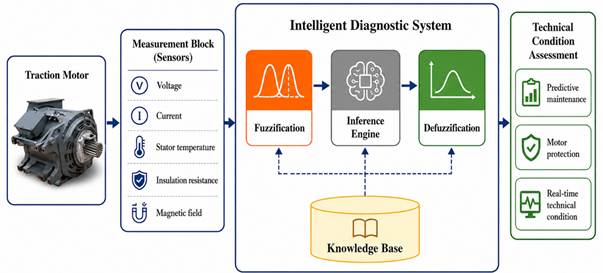
Fig. 1. Structure of
the traction motor intelligent diagnostic system
3.2. Selection of fuzzy inference algorithm and membership function
Early detection and accurate diagnosis of
faults in modern electric traction systems are essential for reliable
operation. Traditional methods based on hard threshold values give limited
results in uncertain and variable operating modes. Therefore, in recent years,
intelligent diagnostic systems based on fuzzy logic have found wide application
[14-16, 19].
In this study, a diagnostic system based on a
fuzzy knowledge base is developed to assess the current technical condition of
traction motors. The system models nonlinear dependencies between input and
output parameters. A two-stage approach is applied: in the first stage,
structural identification is performed using “if…then…” linguistic rules, and a
fuzzy knowledge base is formed; in the second stage, possible faults in
electrical components are assessed based on a Mamdani-type fuzzy inference
system (FIS). The model is developed in the MATLAB Fuzzy Logic Toolbox
environment.
The Mamdani inference algorithm was selected
because of its interpretability, ability to process uncertain input data, and
suitability for rule-based diagnostic decision-making with multiple input
parameters. Compared with the Sugeno model, which is
often used for control and optimization tasks with functional outputs, the
Mamdani model provides more interpretable linguistic outputs after
defuzzification.
There is no universal procedure for selecting
membership functions for linguistic variables; therefore, their selection is
usually based on expert knowledge and simulation-based tuning. The choice of
Gaussian MF is justified by the following considerations:
• Continuous and smooth transition.
Gaussian functions allow for continuous transition between parameter values
without creating sharp boundaries, which more realistically models natural
changes in physical systems.
• Robustness to noise. Gaussian
functions provide more stable results against random noise and small
fluctuations that may be present in sensor data.
• Differentiability. If the system is
further expanded by optimization and learning, mathematical derivatives of the
Gaussian function exist and can be used in algorithms of adaptive control
systems.
Thus, Gaussian-type membership function curves
allow for more flexible and objective conclusions in terms of adaptation to
fluctuations in a fuzzy logic system.
The output of the model is
determined in the "Decision" block, and this block determines the
technical condition of the electrical part of the motor. The output values can
be assessed as “Working”, “Maintenance” or “Protect” depending on the condition
of the motor. This output can then be combined with the mechanical condition in
a complex system to assess the overall technical condition and predict
maintenance time.
4. MODELING OF A FUZZY
DIAGNOSTIC SYSTEM FOR ELECTRICAL FAULTS IN A TRACTION MOTOR
After defining the system
architecture, inference algorithm, and membership function types, the fuzzy
diagnostic model can be formulated. The membership function matrix for the five
input variables is formulated as follows:
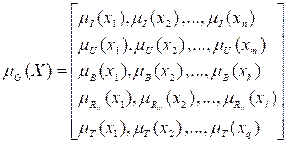 (1)
(1)
Here,  current, voltage, magnetic field, insulation resistance, and
temperature are membership functions of the terms of the input linguistic
variables, respectively. Similarly, the membership function of the output
variable is expressed as follows:
current, voltage, magnetic field, insulation resistance, and
temperature are membership functions of the terms of the input linguistic
variables, respectively. Similarly, the membership function of the output
variable is expressed as follows:
 (2)
(2)
Let us mathematically express the  term subsets of the input linguistic variables. The
linguistic variables “Current”, “Voltage”, “Magnetic field”, “Insulation
resistance” and “Temperature” can be written in general terms using the
following algorithm:
term subsets of the input linguistic variables. The
linguistic variables “Current”, “Voltage”, “Magnetic field”, “Insulation
resistance” and “Temperature” can be written in general terms using the
following algorithm:
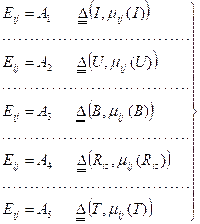 ,
,  (3)
(3)
Here,  is the number of input linguistic variables;
 is the number of terms
of each input linguistic variable;
is the number of terms
of each input linguistic variable;  is the term-subset of the input linguistic variables and can
be written as follows:
is the term-subset of the input linguistic variables and can
be written as follows:
 ,
,  (4)
(4)
Let us mathematically express the  term subsets of the linguistic variables “Decision”:
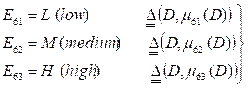 (5)
(5)
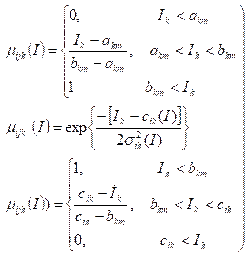
Since the membership functions of
the terms of the input linguistic variables ,
, ,
,  ,
, ,
,  are assumed to be Z-shaped, S-shaped, and Gaussian, they can
be written in the following general form:
are assumed to be Z-shaped, S-shaped, and Gaussian, they can
be written in the following general form:
 ,
,  (6)
(6)
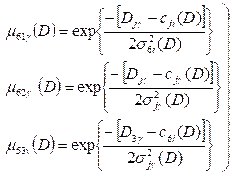
Output for the membership function of the
linguistic variable “Decision” 
 ,
, (7)
(7)
The parameters of the membership
functions were selected based on the operating ranges of the considered 6FRA
4567 H traction motor and were then adjusted during simulation modeling. For
the Z-shaped and S-shaped functions, the two parameters represent the lower and
upper transition limits. For the Gaussian function, the first parameter
represents the standard deviation, while the second parameter represents the
center of the function.
Tab.
3
Characteristics of membership functions of input
linguistic variables
|
Terms of linguistic variables |
Membership function |
Parameters of the membership function |
|
Voltage |
||
|
Allowable |
Z |
[0 1607.80] |
|
Warning |
Gaussian |
[98.6 377.33] |
|
Dangerous |
S |
[1401.52 1626.0] |
|
Current |
||
|
Allowable |
Z |
[0 651.05] |
|
Warning |
Gaussian |
[47.3 549.56] |
|
Dangerous |
S |
[569.36 650] |
|
Stator temperature |
||
|
Allowable |
Z |
[0 230.6] |
|
Warning |
Gaussian |
[7.86 110.37] |
|
Dangerous |
S |
[107 149.91] |
|
Insulation resistance |
||
|
Allowable |
Z |
[0.0119 2] |
|
Warning |
Gaussian |
[0.158 0.802] |
|
Dangerous |
S |
[0 1.236] |
|
Magnetic field |
||
|
Allowable |
Z |
[0 2.2] |
|
Warning |
Gaussian |
[0.106 1.3102] |
|
Dangerous |
S |
[0.8873 2] |
Tab.
4
Characteristics of the membership function of the
output linguistic variable
|
Terms of linguistic variables |
Membership function |
Parameters of the membership function |
|
Technical condition |
||
|
Allowable |
Gaussian |
[0.1896 0.0248] |
|
Warning |
[0.1899 0.4993] |
|
|
Dangerous |
[0.1814 0.9965] |
|
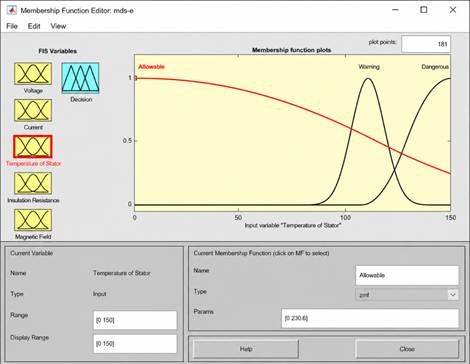
Fig. 2. Modeling
results of MF in terms of input linguistic variables
The output linguistic variable represents the
electrical technical condition of the traction motor. The output range is
normalized in the interval [0; 1], where values close to 0 correspond to a
dangerous condition, values around the middle of the interval correspond to a
warning condition, and values close to 1 correspond to an allowable condition.
This normalization makes it possible to use the fuzzy output not only for
diagnostic classification but also for maintenance decision support.
Based on Equations (6) and (7) and
the membership function parameters presented in Tables 3 and 4, the input
and output membership functions were tuned through simulation modeling. The
results obtained are presented in Figures 2 and 3.
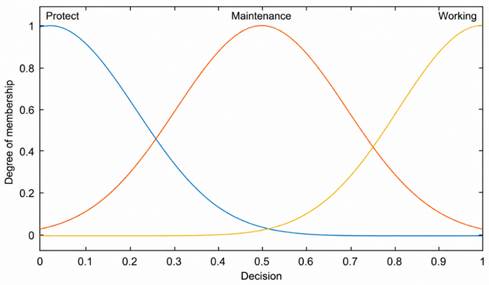
Fig. 3. Modeling
results of MF in terms of the output linguistic variable
For the considered case, the membership function of the fuzzy
relationship between input-output linguistic variables is determined by max-min
composition:
 (8)
(8)
An intelligent diagnostic
system for traction motor electrical faults was developed using fuzzy logic
theory. The fuzzy diagnostic system includes five input linguistic variables
corresponding to the selected diagnostic parameters and one output linguistic
variable, “Technical condition”.
After the input parameters
are processed by the fuzzy rule base, the system generates a diagnostic
decision that characterizes the technical condition of the motor. The results
of the fuzzy logic inference mechanism can evaluate the electrical
condition of the traction motor as “Working”,
“Maintenance” or “Protect”. The output value can be transferred to the
execution block and combined with mechanical condition indicators to support an
overall condition assessment and maintenance time prediction.
The block diagram of the operation algorithm of the fuzzy diagnostic
system for assessing the technical condition of the traction motor is given in
Figure 4.
As shown in
Figure 4, real-time diagnostic parameters from sensor-measuring devices are
transmitted to a fuzzy decision-making system.
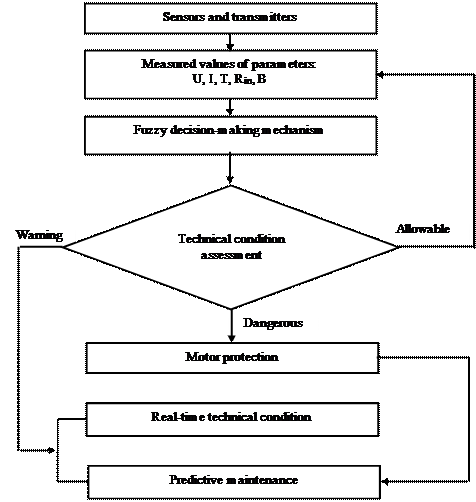
Fig. 4. Block diagram of the fuzzy diagnostic system for
the technical condition of the traction motor
In this system, the technical condition of the
traction motor is assessed based on linguistic rules, and measures are taken
according to the result: in the case of a “dangerous” result, the protection
system is activated, and the motor is disconnected from the power source; in
the case of a “warning” result, the further operating time and distance are
determined; in the case of an “allowable” result, the motor operation is
continued.
The advantages of the proposed diagnostic
system are:
§ Allows decision-making under
conditions of uncertain and stochastic changes in input parameters;
§ Real-time operational analysis is
performed based on sensor data;
§ Automatic and intelligent assessment
of motor removal for repair is provided;
§ Mamdani’s algorithm is transparent
in terms of interpretation and understandable to technical specialists.
The system can be extended for predictive
maintenance and allows for the assessment of the remaining service life of the
traction motor. For this, a normalized electrical technical condition indicator
(ETCI) is used. The remaining service life is calculated based on the current
ETCI value, the critical limit, and the ETCI deterioration rate. In addition,
the remaining service distance is determined based on the actual operating
speed of the traction equipment.
4.3.
Prognostic assessment of maintenance scheduling and remaining operational
distance based on the technical condition index
The proposed system represents the
electrical technical condition of the traction motor as a normalized index
obtained from the fuzzy inference output. In this study, ETCI is used as an
auxiliary prognostic indicator rather than as a directly measured physical
quantity. It is obtained from the fuzzy inference output and reflects the
integrated electrical condition of the traction motor based on the selected
diagnostic parameters.
 (9)
(9)
where ETCI = 1 corresponds to a normal
condition, while ETCI approaching 0 indicates a condition close to the critical
failure level. The main idea of predictive maintenance is to estimate the
remaining time or distance before maintenance based on the current ETCI value
and its degradation rate [21, 22-25]. To reduce the sensitivity of the
measurements to noise, ETCI(t) is exponentially smoothed (9). Ek=ETCI(k∆t),
∆t is the sampling step. Then the average degradation rate of the
index is determined by the window method:
 (10)
(10)
where m - is the window length, ε - is a small positive number that
prevents division by zero.
The critical limit Ecrit
- is chosen according to technical standards (or the “warning-dangerous”
boundary). In this case, the remaining time to repair is estimated as follows:
 (11)
(11)
If the current or average speed of
the locomotive is known, the remaining mileage until repair:
 (12)
(12)
If  is present, the system evaluates it as a
“critical” condition and a repair/protection decision is activated. To account
for noise, the standard deviation of the
is present, the system evaluates it as a
“critical” condition and a repair/protection decision is activated. To account
for noise, the standard deviation of the  values over the window, σE, can be taken to give a simple interval for
prediction:
values over the window, σE, can be taken to give a simple interval for
prediction:
 (13)
(13)
where β can be chosen in practice to be 1-2
(e.g., β
=2 for a
conservative forecast). Analogously, the (RUD) interval is calculated with 
5. RESULTS OF MODELING OF A FUZZY DIAGNOSTIC SYSTEM FOR ELECTRICAL
FAULTS IN A TRACTION MOTOR
The calculations were performed
using the Simulink model. The model included the linguistic variables defined
in Equations (3)-(5), the membership functions described in Equations (6) and
(7), the adjusted parameters presented in Tables 3 and 4, and the fuzzy
relations given in Equation (8). The measured values of the parameters
characterizing the electrical state of the motor in real operating conditions
were used to perform the modeling. Table 5 presents the simulated stator
temperature values corresponding to the allowable, warning and dangerous
states. Similar datasets were generated for the other input parameters. Other
parameters are also set analogously to Table 5.
The simulation dataset was generated
to cover the three diagnostic states. The values were selected according to the
operating ranges presented in Table 2. Therefore, the dataset should be
considered as a structured simulation dataset rather than a real operational
dataset collected from long-term locomotive operation.
Tab. 5
Temperature values of the stator windings of
the motor corresponding to the technical condition
|
Stator temperature,
0C |
|||
|
№ |
Allowable |
Warning |
Dangerous |
|
t < 100°C |
100-120°C |
t > 120°C |
|
|
1 |
3.5°C |
100.5°C |
121.4°C |
|
2 |
7.8°C |
101.8°C |
124.7°C |
|
3 |
12.1°C |
102.9°C |
128.2°C |
|
4 |
18.6°C |
104.3°C |
130.6°C |
|
5 |
21.9°C |
105.7°C |
134.1°C |
|
6 |
27.3°C |
106.5°C |
137.8°C |
|
7 |
32.8°C |
107.9°C |
140.3°C |
|
8 |
36.5°C |
109.2°C |
144.9°C |
|
9 |
41.2°C |
110.4°C |
147.2°C |
|
10 |
45.6°C |
111.8°C |
150.6°C |
|
11 |
51.3°C |
112.3°C |
154.3°C |
|
12 |
55.7°C |
113.5°C |
157.1°C |
|
13 |
60.4°C |
114.7°C |
160.8°C |
|
14 |
64.8°C |
115.9°C |
163.4°C |
|
15 |
70.2°C |
116.3°C |
167.2°C |
|
16 |
74.9°C |
117.5°C |
170.6°C |
|
17 |
80.5°C |
118.1°C |
173.1°C |
|
18 |
85.1°C |
118.9°C |
176.4°C |
|
19 |
90.3°C |
119.3°C |
178.9°C |
|
20 |
96.7°C |
119.8°C |
179.5°C |
The input parameter values used in
the model were generated as artificial simulation data covering all three
technical states: allowable, warning and dangerous. In future work,
these simulated values can be replaced or supplemented with measurements
obtained from real operating conditions. Figure 5 shows the 10-step value
changes of the stator temperature for a conditional 10-second time period.
These values are formed according to the values of each parameter during the
simulation (Figure 5).
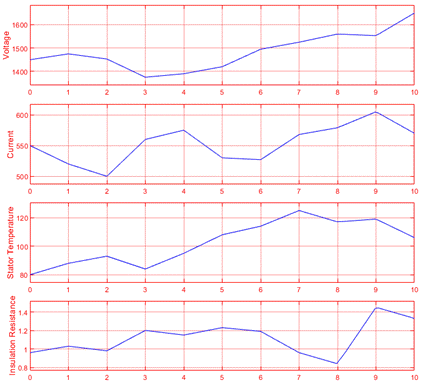
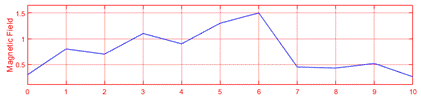
Fig. 5. Simulation curves of selected informative parameters in
various technical states of the traction motor
The results of the simulation modeling of the linguistic approximation of the input and
output variables based on the decision-making matrix of the fuzzy diagnostic
system and the decision-making fragments for the considered case are given in
Figures 6 and 7, respectively.
In the proposed fuzzy diagnostic system, 243 linguistic rules are formed based
on the combinatorial structure of the input variables. The system consists
of 5 input linguistic variables, and each input variable is described by 3
linguistic terms (Allowable/Warning/Dangerous). In this case, the total number
of fuzzy rules is determined as follows: 𝑁=35=243. The rules are based on the
“if-then” structure and are compiled taking into account the existing technical
standards, standard limits, and expert knowledge on the operation of traction
motors.
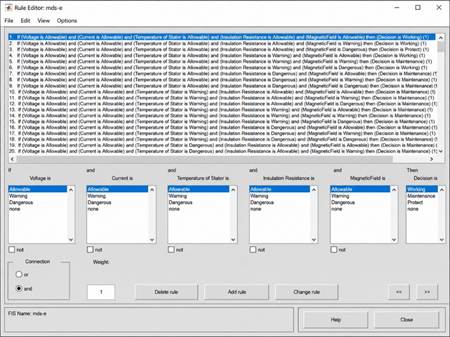
Fig. 6. Simulink fuzzy rules matrix of an electrical fault diagnosis
system
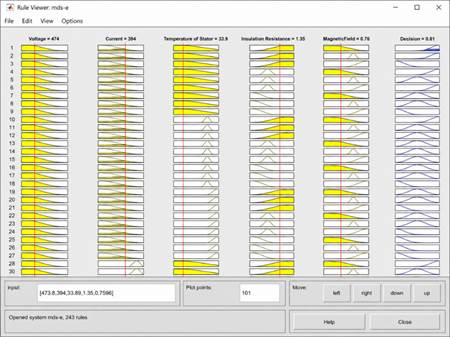
Fig. 7. Fragment of fuzzy decision-making for power failure
The rule base covers all possible
main operating modes of the electrical parameters of the motor and allows for
adequate differentiation of allowable, warning, and dangerous states. This
approach provides the integrity and consistency properties of the fuzzy system
and has sufficient computational efficiency for real-time diagnostics. In the
current situation considered, as can be seen from Figure 7, a decision was made
based on the 28th linguistic fuzzy rule of the knowledge base.
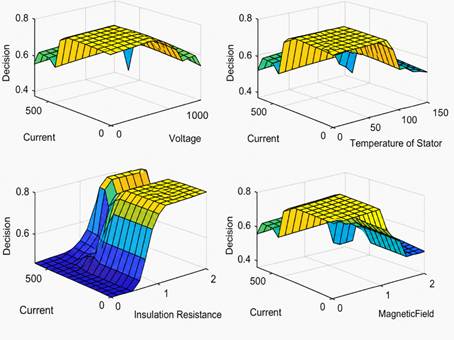
Fig. 8. Pairwise
dependence surface representations of the diagnostic system 
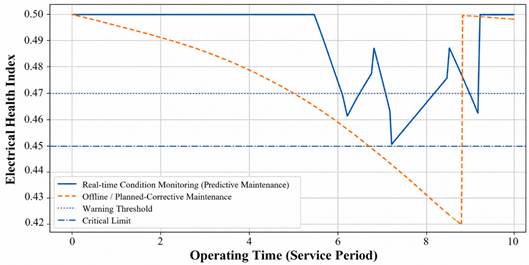
Fig. 9. Comparison chart of real-time and offline assessment of
the “Electrical Technical Condition” of a traction motor
Figure 8 presents pairwise surface plots showing the relationship between
the selected input parameters and the diagnostic output. These plots illustrate
how changes in the input variables affect the technical condition indicator.
The smooth transitions between the surface regions confirm that the proposed
fuzzy model avoids abrupt decision changes near the boundaries between
allowable, warning and dangerous states. This behavior
is important for real-time diagnostics because short-term fluctuations and
sensor noise should not lead to unstable maintenance decisions.
Other surface dependencies of the
assessment of the technical electrical condition of the traction motor can be analyzed similarly.
Based on
the methodology given above, a Simulink implementation of a fuzzy diagnostic
system for the electrical condition of the traction motor, based on five
electrical parameters, was developed. Figure 9 compares the behavior
of the proposed real-time condition monitoring approach with a conventional
offline planned-corrective maintenance strategy. In the real-time monitoring
scenario, the degradation trend can be detected before the critical limit is
reached. In contrast, the offline approach may identify the deterioration later
because the technical condition is assessed only during scheduled inspections
or after fault occurrence.
Up to states 5-6, the electrical
condition of the motor remains within the normal operating range. Between
states 6 and 9, the electrical parameters indicate a deterioration trend, and
the diagnostic system generates the corresponding maintenance recommendations.
After state 9, the modelled condition returns to the normal operating range.
If real-time diagnostics are not
applied, the technical conditions of traction motors are assessed only based on
scheduled inspections and failure events. This leads to late detection of the
degradation process and sudden failures.
To take into account the uncertainty
of sensor measurements, white Gaussian noise with a mean value of zero was
added to the input signals. The standard deviation of the noise was taken as 2%
of the measured quantity, which corresponds to the typical accuracy level of
industrial sensors:
 (14)
(14)
where x(t) – ideal measurement; xn(t) – noisy measurement; σ – is chosen according to the
technical accuracy of the sensor and is taken as 2%.
After simulating the same scenario
with noise N=30 times, the mean and standard deviation were calculated
using the following expression:
 (15)
(15)
A 95% confidence interval was
obtained for the ETCI output.
Table 6 presents a comparative
evaluation of the proposed fuzzy logic-based diagnostic model with traditional
and machine learning-based approaches using the same input parameters. The
compared models were implemented using standard configurations without
extensive hyperparameter optimization. The comparative analysis under the
considered simulation conditions shows that the proposed fuzzy logic-based
approach provides lower error values and more stable output behavior
than the selected baseline diagnostic methods. However, these results should
not be interpreted as final proof of superiority over data-driven models,
because the comparison was performed using simulated input scenarios and
standard model configurations without extensive hyperparameter optimization.
Although data-driven models demonstrate competitive accuracy, their real-time
application and interpretation are limited. The proposed method provides a
balanced trade-off between accuracy, stability, and real-time feasibility.
Tab. 6
Comparison of diagnostic methods
|
Method |
RMSE |
MAE |
Output stability |
Real-time compatibility |
|
Threshold-based |
0.142 |
0.118 |
Allowable |
Dangerous |
|
ANN |
0.091 |
0.074 |
Warning |
Warning |
|
SVM |
0.084 |
0.069 |
Warning |
Allowable |
|
Random Forest |
0.079 |
0.063 |
Warning |
Allowable |
|
ANFIS |
0.072 |
0.058 |
Dangerous |
Warning |
|
Proposed Fuzzy model |
0.065 |
0.051 |
Dangerous |
Dangerous |
Therefore,
Table 6 should be interpreted as a simulation-based comparative assessment. The
purpose of this comparison is to demonstrate the feasibility and stability of
the proposed fuzzy diagnostic framework rather than to provide a complete
experimental benchmark against machine learning methods. Note: values are calculated based on
the normalized technical condition index.
The results show that the proposed
method provides a favorable balance between
diagnostic accuracy, output data stability, and real-time application.
The
obtained modeling results confirm the feasibility of
using a fuzzy logic-based approach for the electrical fault diagnosis of
traction motors. However, several limitations should be noted. First, the
validation of the proposed system was performed mainly in the MATLAB/Simulink
simulation environment. Therefore, the obtained RMSE, MAE and output stability
indicators should be interpreted as simulation-based performance measures
rather than final evidence of diagnostic reliability under real locomotive
operating conditions.
Second,
the simulation scenarios were generated according to predefined allowable,
warning, and dangerous ranges of the selected electrical parameters. Although
these ranges reflect the operating characteristics of the considered traction
motor, they do not fully reproduce all degradation mechanisms that may occur
during long-term railway operation. In practice, the diagnostic output may be
affected by sensor drift, environmental disturbances, changing load profiles,
cooling conditions, insulation ageing, and maintenance history.
Third,
the present study does not use a large labeled
dataset of confirmed electrical faults. For this reason, classification metrics
such as accuracy, precision, recall, and F1-score were not used as the main
validation criteria. The proposed system should therefore be considered as a
simulation-validated diagnostic framework. Future research will focus on
testing the model using long-term operational data from real traction motors
and comparing the diagnostic results with maintenance records and confirmed
failure cases.
6. CONCLUSION
This study developed a
fuzzy logic-based diagnostic model for the real-time assessment of electrical
faults in traction motors. The proposed system uses five input parameters -
voltage, current, stator temperature, insulation resistance, and magnetic field,
and generates one output variable representing the electrical technical
condition of the motor.
The proposed fuzzy logic-based diagnostic model
can detect and assess electrical faults under uncertain operating conditions.
The combination of the Mamdani inference mechanism and Gaussian membership
functions improves the smoothness and stability of diagnostic decisions under
the considered simulation conditions.
The main advantages of the model are its
real-time applicability, direct processing of sensor data, and ability to
support maintenance decision-making. Unlike traditional hard-limit diagnostic
methods, this approach lays the groundwork for the development of predictive
maintenance systems and is fully consistent with the concept of Condition-Based
Maintenance (CBM).
In future
work, the proposed approach may be adapted for other electric machines and
industrial equipment after validation using real operational data. The present study has several
limitations. The proposed fuzzy diagnostic model was tested mainly in a
simulation environment, and long-term time-series data from real locomotive
traction motors were not used at this stage. In addition, the absence of labeled fault cases limits the possibility of calculating
classification-based validation metrics such as accuracy, precision, recall,
and F1-score. Therefore, the results should be interpreted as simulation-based
confirmation of the feasibility of the proposed approach. Future research will
focus on experimental validation using real operational data, refinement of
membership function parameters, analysis of incorrect diagnostic decisions, and
integration of the electrical diagnostic module with mechanical and thermal
condition monitoring systems.
References
1.
Vaimann
Toomas, Jose Alfonso Antonino-Daviu, Anton Rassõlkin. 2023. „Novel
approaches to electrical machine fault diagnosis”. Energies 16(15):
5641. DOI: https://doi.org/10.3390/en16155641
2.
Issa
Razan, Guy Clerc, Malorie Hologne-Carpentier, Ryan Michaud, Eric Lorca,
Christophe Magnette, Anes Messadi. 2024. „Review of fault diagnosis methods for
induction machines in railway traction applications”. Energies 17(11):
2728. DOI: https://doi.org/10.3390/en17112728
3.
Gangsar
Purushottam, Rajiv Tiwari. 2020. „Signal based condition monitoring techniques
for fault detection and diagnosis of induction motors: a state-of-the-art
review”. Mechanical Systems and Signal Processing 144: 106908. DOI: https://doi.org/10.1016/j.ymssp.2020.106908
4.
Dineva
Adrienn, Amir Mosavi, Mate Gyimesi, Istvan Vajda, Narjes Nabipour, Timon
Rabczuk. 2019. „Fault diagnosis of rotating electrical machines using
multi-label classification”. Applied Sciences 9(23): 5086. DOI: https://doi.org/10.3390/app9235086
5.
Jigyasu
Rajvardhan, Amandeep Sharma, Lini Mathew, Shantanu Chatterji. 2018. „A review of condition monitoring and fault diagnosis
methods for induction motor”. In: 2018
Second International Conference on Intelligent Computing and Control Systems
(ICICCS): 1713-1721. Madurai, India, 14-15 June 2018.
DOI: https://doi.org/10.1109/ICCONS.2018.8662833.
6.
Lei
Yaguo, Bin Yang, Xinwei Jiang, Feng Jia, Naipeng Li, Asoke K. Nandi. 2020.
„Applications of machine learning to machine fault diagnosis: a review and
roadmap”. Mechanical Systems and Signal Processing 138: 106587. DOI: https://doi.org/10.1016/j.ymssp.2019.106587
7.
Kumar
Prashant, Ananda Shankar Hati. 2021. „Review on machine learning algorithm
based fault detection in induction motors”. Archives of Computational
Methods in Engineering 28(3): 1929-1940. DOI: https://doi.org/10.1007/s11831-020-09446-w.
8.
Mari
Simone, Giovanni Bucci, Fabrizio Ciancetta, Edoardo Fiorucci, Andrea
Fioravanti. 2024. „Impact of measurement uncertainty on fault diagnosis
systems: a case study on electrical faults in induction motors”. Sensors
24(16): 5263. DOI: https://doi.org/10.3390/s24165263.
9.
Xu
Zhuoran, Qianmu Li, Linfang Qian, Manyi Wang. 2022. „Multi-sensor fault
diagnosis based on time series in an intelligent mechanical system”. Sensors
22(24): 9973. DOI: https://doi.org/10.3390/s22249973.
10. Gangsar Purushottam, Rajiv Tiwari. 2017. „Comparative
investigation of vibration and current monitoring for prediction of mechanical
and electrical faults in induction motor based on multiclass-support vector
machine algorithms”. Mechanical Systems and Signal Processing 94:
464-481. DOI: https://doi.org/10.1016/j.ymssp.2017.03.016.
11. Halder Sudip, Sunil Bhat, Daria Zychma, Pawel Sowa. 2022.
„Broken rotor bar fault diagnosis techniques based on motor current signature
analysis for induction motor – a review”. Energies 15(22): 8569. DOI: https://doi.org/10.3390/en15228569.
12. Zarri Luca, Michele Mengoni, Yasser Gritli, Angelo Tani,
Fiorenzo Filippetti, Giovanni Serra, Domenico Casadei. 2013. „Detection and
localization of stator resistance dissymmetry based on multiple reference frame
controllers in multiphase induction motor drives”. IEEE Transactions on
Industrial Electronics 60(8): 3506-3518. DOI: https://doi.org/10.1109/TIE.2012.2235393.
13. Pastura Marco, Mauro Zigliotto. 2024. „Fault diagnosis in
electrical machines for traction applications: current trends and challenges”. Energies
17(21): 5440. DOI: https://doi.org/10.3390/en17215440.
14. Salahuddin Humayun, Kashif Imdad, Muhammad Umar Chaudhry,
Dmitry Nazarenko, Vadim Bolshev, Muhammad Yasir. 2022. „Induction machine-based
EV vector control model using Mamdani fuzzy logic controller”. Applied
Sciences 12(9): 4647. DOI: https://doi.org/10.3390/app12094647.
15. Wang Qian, Jinde Cao, Heng Liu. 2022. „Adaptive fuzzy
control of nonlinear systems with predefined time and accuracy”. IEEE
Transactions on Fuzzy Systems 30(12): 5152-5165. DOI: https://doi.org/10.1109/TFUZZ.2022.3169852.
16. Kumar Rahul R., Mauro Andriollo, Giansalvo Cirrincione,
Maurizio Cirrincione, Andrea Tortella.
2022. „A comprehensive review of conventional and intelligence-based approaches
for the fault diagnosis and condition monitoring of induction motors”. Energies
15(23): 8938. DOI: https://doi.org/10.3390/en15238938.
17. Ahmadov Heybatulla, Elshan Manafov, Huseyngulu Guliyev,
Farid Huseynov. 2025. „A fuzzy
logic-based multi-sensor diagnostic system for traction motor bearings in
railway applications”. Transport Problems 20(2): 73-84. DOI: https://doi.org/10.20858/tp.2025.20.2.06.
18. Singh Rupam, Bharat Bhushan. 2021. „Condition monitoring
based control using wavelets and machine learning for unmanned surface
vehicles”. IEEE Transactions on Industrial Electronics 68(8): 7464-7473.
DOI: https://doi.org/10.1109/TIE.2020.3001855.
19. Huang Sunan, Haoyong Yu. 2013. „Intelligent fault
monitoring and diagnosis in electrical machines”. Measurement 46(9):
3640-3646. DOI: https://doi.org/10.1016/j.measurement.2013.07.004.
20. Bianchi Gabriele, Francesco Freddi, Felice Giuliani, Aldo
La Placa. 2025. „Implementation of an AI-based predictive structural health
monitoring strategy for bonded insulated rail joints using digital twins under
varied bolt conditions”. Railway Engineering Science 33: 703-720. DOI: https://doi.org/10.1007/s40534-024-00371-3.
21. Nandi Subhasis, Hamid A. Toliyat, Xiaodong Li. 2005.
„Condition monitoring and fault diagnosis of electrical motors – a review”. IEEE Transactions on Energy Conversion
20(4): 719-729. DOI: https://doi.org/10.1109/TEC.2005.847955.
22. Huang Zhiyi, Xiao Li. 2025. „A critical review of
operations research on the operation and maintenance of railway systems”. Journal
of Railway Science and Technology 1(2): 47-58. DOI:
https://doi.org/10.1016/j.jrst.2025.08.001.
23. Doorsamy Wesley. 2025. „Condition monitoring of electric
machines: modern frameworks and data-driven methodologies”. Machines
13(2): 144. DOI: https://doi.org/10.3390/machines13020144.
24. Truong Duc Phuc, Nguyen Hoang Vu, Dang Tran Bach. 2025.
„High accurate smart device for real-time monitoring electric motor conditions
based on IoT technology and artificial intelligence”. Smart Systems and
Devices 35(2): 25-34. DOI: https://doi.org/10.51316/jst.182.ssad.2025.35.2.4.
25. Kalel Dattatraya, R. Raja Singh. 2024. „IoT integrated
adaptive fault tolerant control for induction motor based critical load
applications”. Engineering Science and Technology, an International Journal
51: 101585. DOI: https://doi.org/10.1016/j.jestch.2023.101585.
Received 23.01.2026; accepted in
revised form 05.05.2026

Scientific
Journal of Silesian University of Technology. Series Transport is licensed
under a Creative Commons Attribution 4.0 International License