Article citation information:
Wulandari, A.I., Alamsyah, Syahab, H., Agusty, C.L.,
Pratama, F.W. Human comfort and safety investigation on ro-ro
ferries through ship motions under varying operational conditions. Scientific Journal of Silesian University of
Technology. Series Transport. 2026, 131,
275-301. ISSN: 0209-3324. DOI: https://doi.org/10.20858/sjsutst.2026.131.16
Amalia Ika WULANDARI[1], ALAMSYAH[2], Husein SYAHAB[3],
Cindy Lionita AGUSTY[4], Fernanda Wahyu
PRATAMA[5]
HUMAN COMFORT AND SAFETY INVESTIGATION ON RO-RO FERRIES THROUGH SHIP
MOTIONS UNDER VARYING OPERATIONAL CONDITIONS
Summary. The coexistence of vehicles and passengers on
roll-on/roll-off (Ro-Ro) ferries demands rigorous management of operational
comfort and safety, particularly in Indonesia’s archipelagic waters, which are
characterized by high vessel traffic density and seasonally rough seas. This
study investigates the seakeeping performance of a Ro-Ro ferry through the
computation of Response Amplitude Operators (RAOs) and the evaluation of
passenger comfort using Motion Sickness Incidence (MSI) and Motion-Induced
Interruption (MII) indices. Numerical simulations were conducted at wave
incidence angles of 0°, 90°, and 180° for significant wave heights of 3.0 m and
3.5 m. MSI and MII were quantified for the passenger, vehicle, and navigation
decks at vessel speeds of 0 and 12 knots. The results indicate that RAOs
satisfy the 1987 NORDFORSK criteria at 0° and 180°, whereas the roll response
at 90° exceeds the 3.97° threshold, reaching 5.6°. MSI values largely fall
within the moderate category under ISO 2631 guidelines, with an alert condition
observed at 12 knots and 180°. MII results classify interruption probability as
“possible” for most scenarios, but “probable” on passenger and vehicle decks at
90°. These findings highlight that while the ferry demonstrates acceptable
seakeeping performance in head and following seas, beam seas (90° incidence)
substantially degrade stability and passenger comfort, underscoring the
importance of operational speed management and voyage planning for inter-island
ferry operations in Indonesian waters.
Keywords: motion
sickness incidence, motion-induced interruptions, passenger comfort,
seakeeping, ro-ro ship
1. INTRODUCTION
1.1
Background
In
ship design, particular attention must be given to the comfort of passengers
and crew, as this factor plays a decisive role in the quality and safety of
operations
Roll-on/Roll-off
(Ro-Ro) ferries represent a ship type with unique operational characteristics.
These vessels are designed to transport wheeled cargo such as cars, trucks, and
buses, which are driven directly on and off the ship via ramps
The
concept of seakeeping, defined as a vessel’s ability to maintain effective and
comfortable operation in a seaway, is therefore of particular relevance to
Ro-Ro ferries
One
crucial aspect of this management is understanding and minimizing Motion
Sickness Incidence (MSI), as passenger comfort is a significant determinant of
service quality, operational reputation, and crew performance. MSI refers to
the percentage of passengers or crew expected to experience motion sickness
under a given set of sea conditions
The
study uses Linear Strip Theory, a widely applied method in seakeeping analysis
for conventional ships. This method simplifies the three-dimensional ship hull
into a series of two-dimensional cross-sectional “strips” along the length of
the vessel
Therefore,
this study aims to comprehensively evaluate the motion responses of a Ro-Ro
ferry under varying wave heights and incidence angles, with a particular focus
on roll, pitch, and heave motions that critically affect vessel performance. By
applying Linear Strip Theory, the research quantifies the resulting MSI and MII
on both passenger and vehicle decks, considering the unique load distribution
of Ro-Ro ferries where vehicles and passengers share space above the waterline.
The goal is to provide insights into passenger comfort, crew safety, and
overall operational reliability, thereby contributing to the development of
safer and more efficient Ro-Ro ferry designs.
1.2
Research Framework
In
this study, the analysis of Ro-Ro ferry seakeeping performance was carried out
under varying operational conditions by considering different wave headings
(0°, 90°, and 180°), wave heights (3.0 m and 3.5 m), and ship speeds (0 and 12
knots). The dependent responses evaluated included heave, pitch, and roll
motions, along with Motion Sickness Incidence (MSI) and Motion-Induced
Interruptions (MII). These responses were analyzed with respect to the vessel’s
principal dimensions, load distribution on passenger, vehicle, and crew decks,
as well as tank arrangements, which were kept constant as control parameters.
The method applied combined linear strip theory for hydrodynamic predictions,
Response Amplitude Operator (RAO) analysis, and irregular wave input, with
human comfort assessed based on ISO 2631 for MSI and established criteria for
MII. The overall research framework adopted in this study is presented
schematically in Figure 1.
Previous
studies have examined seakeeping performance and its relation to safety and
comfort across various vessel types.
In
this study, the linear strip theory was applied to analyze the influence of
ocean waves on the motion of a Ro-Ro passenger ferry and to evaluate the
resulting MSI and MII for crew and passengers. This work addresses the
operational challenge highlighted in the background, where the unique load
distribution of Ro-Ro ferries, with vehicles and passengers on the same deck,
makes them particularly sensitive to wave-induced motions that can impact both
comfort and safety. The hydrodynamic analysis was carried out by calculating
the vessel’s Response Amplitude Operators (RAOs) for selected wave headings of
0°, 90°, and 180° under representative sea states and vessel speeds. From these
results, key motion responses (heave, roll, pitch) were determined at both
passenger and crew deck locations. These values were then used to estimate MSI
and MII according to internationally recognized comfort and safety criteria,
allowing an assessment of vessel operability under different conditions.
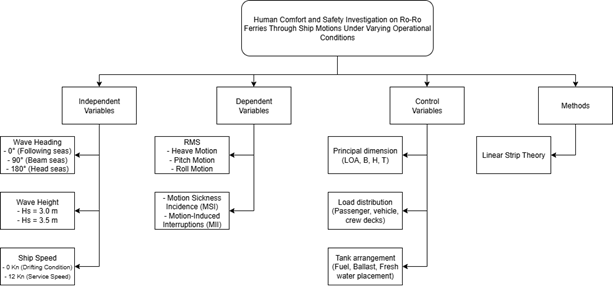
Fig. 1. Research
framework
This
methodological approach has several strengths. By using the actual vessel
geometry and load distribution, it captures the distinct motion behavior of
Ro-Ro ferries more accurately than simplified models. The simulation-based
approach also enables flexible and efficient evaluation of multiple operating
scenarios without the high costs and logistical complexity of sea trials or
towing tank experiments, making it particularly useful for early-stage design
and operational planning. Nevertheless, some limitations must be acknowledged.
The lack of experimental validation introduces uncertainty regarding the
accuracy of the motion predictions, as noted by Li et al.
Tab. 1
Strengths and Limitations of the study
|
Aspect |
Strengths |
Limitations |
|
Model accuracy |
Uses
actual ship geometry and load distribution, resulting in more representative
motion predictions. |
No
experimental validation; accuracy relies entirely on theoretical assumptions. |
|
Methodology |
Linear
Strip Theory enables fast and cost-effective analysis of various operational
conditions without physical tests. |
Assumes
linear behavior; nonlinear and viscous effects are not fully captured,
especially in large waves or high-amplitude motions. |
|
Operational focus |
Explicitly
evaluates Motion Sickness Incidence (MSI) and Motion-Induced Interruptions
(MII) for passenger comfort and crew safety. |
Analysis
is limited to RAO, MSI, and MII; other design factors such as fuel efficiency
or dynamic stability are not examined in depth. |
|
Practical contribution |
Provides
design and operational recommendations to enhance Ro-Ro ferry safety and
comfort. |
Focused
on a single case-study vessel, limiting the generalizability of the findings
to other Ro-Ro ferry types. |
|
Sea condition modeling |
Considers
multiple wave headings (0°, 90°, 180°) and varying wave heights for
comprehensive evaluation. |
Uses
regular wave conditions; real-world irregular and multidirectional seas are
not fully represented. |
This
study stands out from previous research by explicitly integrating ship motion
analysis with passenger and crew comfort metrics, specifically MSI and MII, for
a large Ro-Ro ferry with realistic load distribution where vehicles and
passengers share deck space above the waterline. Unlike many prior works that
focus primarily on operational performance, vessel comparisons, or simplified
hull models, this research applies Linear Strip Theory to actual ship geometry,
enabling a more accurate assessment of vessel motion behavior under varied sea
states and headings. The findings provide actionable insights for ferry design
improvements, operational planning, and safety management, addressing a
critical gap in maritime engineering literature on passenger comfort and
workability in challenging seaways.
2. OBJECT
STUDY AND ANALYSIS APPROACH
2.1
Ship data and operational condition
In
this study, the object of analysis is a Roll-on/Roll-off (Ro-Ro) ferry,
selected due to its distinctive operational characteristics and the combined
presence of passengers and vehicle cargo on the main deck. To enable an
accurate evaluation of the vessel’s motion behavior, as well as the resulting
Motion Sickness Incidence (MSI) and Motion-Induced Interruptions (MII), the
ship’s design parameters were first defined in detail. The principal dimensions
of the vessel, which serve as the foundation for the hydrodynamic analysis, are
presented in Table 2. These parameters ensure that the numerical simulations
reflect the actual geometry and proportions of the ship, rather than relying on
simplified or generic models. To provide further clarity, Figure 2
presents the general arrangement of the Ro-Ro ferry, highlighting the layout of
passenger, vehicle, and crew spaces. In addition, Figure 3 depicts the hull
model that was developed for the purpose of motion analysis, serving as the
basis for evaluating the vessel’s response under various wave conditions.
Tab. 2
Ro-Ro ship dimensions
|
Data |
Dimension |
Unit |
|
LOA |
39.36 |
m |
|
Breadth (B) |
11.00 |
m |
|
Depth (H) |
3.30 |
m |
|
Draught (T) |
2.30 |
m |
|
Operational Speed (Vs) |
12 |
Knot |
|
Crew |
16 |
People |
|
Passenger |
180 |
People |
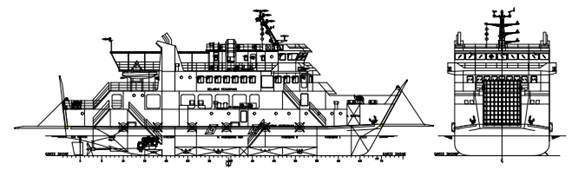
Fig. 2. CAD design of the Ferry Ro-ro ship
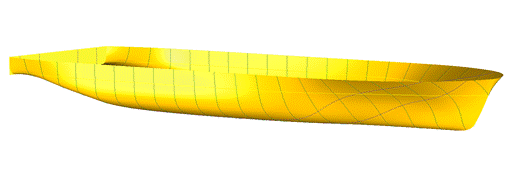
Fig. 3. 3D Hull model of the Ro-ro ship
The
operational conditions considered in this study represent typical service
scenarios for a Ro-Ro passenger ferry in moderate to rough seas. Sea states are
modeled as irregular wave spectra to capture realistic wave energy
distributions, with significant wave heights (Hs) of 3.0 m and 3.5 m.
Vessel forward speed is set at 0 kn (drifting/loitering, e.g., awaiting berth
or adverse-weather maneuvering) and 12 kn (representative service speed). Wave
headings of 0°, 90°, and 180° are examined, visualized in Figure 4,
corresponding respectively to head seas, beam seas, and following seas, to
bracket the principal directional exposures that govern roll, pitch, and heave
responses. This combination of Hs, speed, and heading provides a targeted yet
comprehensive envelope for evaluating motion responses and their implications
for MSI and MII under realistic operating conditions.
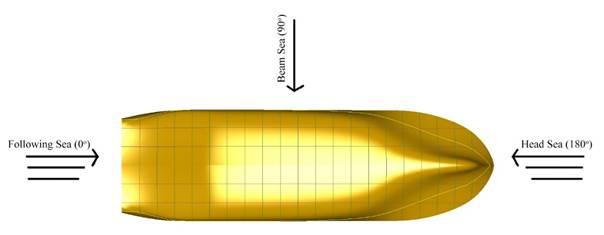
Fig. 4. Wave heading
In
this study, specific mass points were defined to represent the locations of
passengers, crew, and vehicles onboard the Ro-Ro ferry as shown in Figure 5.
These points are crucial in calculating the ship’s motion responses as they
determine where accelerations are experienced and where MSI and MII are
evaluated. Three primary mass points were considered: the passenger deck, the
navigation (crew) deck, and the vehicle deck. The passenger deck is located at
a longitudinal position of approximately 17.23 m from the aft perpendicular
with a height of 7.50 m above the baseline, reflecting the central passenger
accommodation area. The navigation deck, representing the crew working
location, is positioned further forward at 23.00 m from the aft
perpendicular and 12.20 m above the baseline, which corresponds to the bridge
and control station where crew operability and workability are most critical.
The vehicle deck, by contrast, lies lower and slightly aft at a 13.50 m
longitudinal position and 3.30 m above the baseline, reflecting the car and
cargo stowage area. These three points capture the distinct exposure of
passengers, crew, and cargo to ship motions, providing a realistic distribution
for the motion analysis. In addition to the mass points, the positioning of tanks
within the hull plays a vital role in the vessel’s weight distribution and
stability. Ballast tanks are symmetrically arranged on the port (PS) and
starboard (SB) sides at both aft and forward sections, ensuring transverse
stability can be managed effectively. Fuel oil tanks are located centrally on
both port and starboard sides, close to the midship, to minimize trim variation
as fuel is consumed. Freshwater tanks are similarly placed in the forward
midship section, again balanced on both sides. This arrangement follows
conventional practice, where consumable tanks (fuel and freshwater) are
positioned near the ship’s centerline to reduce the influence on trim and heel
during operation, while ballast tanks provide flexibility for adjusting the
vessel’s draft and stability according to loading conditions.
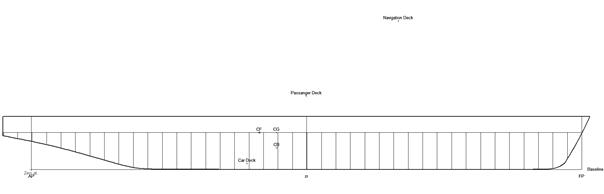
Fig. 5. Mass remote point for passenger and navigation deck
2.2
Linear Strip Theory
Strip
theory is a numerical approach used to predict a ship’s hydrodynamic response
in waves by reducing its three-dimensional hull form into a series of
two-dimensional longitudinal cross-sections, or “strips.” Under the assumption
of linear wave theory, each strip is evaluated independently, and the overall
motion response is obtained by integrating the hydrodynamic forces along the
vessel’s length
The
governing equations of motion for coupled heave and pitch responses in the
frequency domain are expressed in Eq. (1).
|
|
(1) |

Where
Mkj is the rigid-body mass or inertia coefficient, Akj is
the hydrodynamic added mass, Bkj is the damping coefficient, Ckj
is the restoring coefficient, and Fk is the external wave excitation
force. The theory solves for the velocity potential function Φ, which is
decomposed into components from heave and pitch as described in Eq. (2) & Eq. (3).
|
|
(2) |
|
|
|
|
|
(3) |


Hydrodynamic
coefficients such as added mass and damping are computed for each section
through 2D potential flow analysis, then integrated along the ship length to
obtain 3D coefficients:
|
|
(4) |

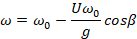
The
encounter frequency ω is
corrected for forward speed and wave heading as:
|
|
|
(5) |
By
solving the coupled equations, one can determine the ship’s response to a given
sea state. These results feed directly into the estimation of vertical relative
motion and accelerations, which are the key inputs for predicting deck wetness
and slamming probabilities. This formulation, while based on linear
assumptions, provides sufficiently accurate predictions for early-stage design
or operational assessment where computational efficiency is crucial
In
strip theory-based seakeeping analysis, the accuracy of the results is
influenced by the precision of the hull discretization along its length. This
precision is improved by increasing the number of longitudinal strips, thereby
enhancing the resolution used to integrate hydrodynamic responses. The strip or
grid independence study was conducted to ensure that the results remained
stable despite changes in refinement, mirroring procedures commonly applied in
resistance calculations under calm water conditions
Tab. 3
Uncertainty analysis for seakeeping simulation
|
Precisions |
Wave Heading (°) |
Comparison (%) |
||
|
`Heave |
Roll |
Pitch |
||
|
Coarse |
0 |
2,53% |
0,00% |
3,85% |
|
90 |
1,58% |
0,00% |
5,92% |
|
|
180 |
2,67% |
0,00% |
3,55% |
|
|
Medium |
0 |
0,11% |
0,00% |
0,11% |
|
90 |
0,83% |
0,00% |
4,91% |
|
|
180 |
0,60% |
0,00% |
2,12% |
|
|
Fine |
0 |
1,43% |
0,00% |
2,65% |
|
90 |
0,55% |
0,00% |
2,94% |
|
|
180 |
0,66% |
0,00% |
1,01% |
|
|
|
|
|
|
(a) |
(b) |
|
|
(c) |
|
|
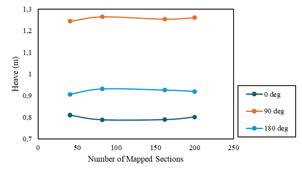
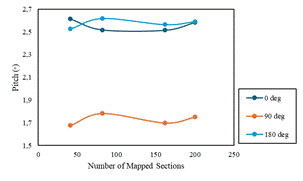
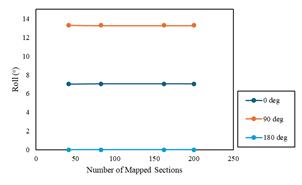
Fig. 6. Comparison of each strip precision for each motion; (a)
Heave, (b) Roll, (c) Pitch
(a)
(b)
(c)
(d)
Fig. 7. Strip precision
for uncertainty analysis;
(a) Coarsest, (b) Coarse, (c) Fine, (d) Finest
The
simulations were conducted using several strip configurations: 41 sections
(coarsest), 82 sections (coarse), 164 sections (medium), and 200 sections
(fine). This refinement process was intended to verify the consistency and
reliability of the predicted ship motions at different levels of resolution. It
was noted that although structured meshes generally improve accuracy, the gains
in precision become marginal once a certain refinement threshold is exceeded.
The results indicated that the relative deviations between configurations
remained within acceptable limits. In engineering analysis, a deviation of less
than 5% is typically considered satisfactory, and this criterion was achieved
in most cases. This suggests that roll motion is largely unaffected by strip
resolution, likely due to the influence of wave heading and the vessel’s
symmetrical hull form. Based on these findings, it can be concluded that while
finer discretization enhances detail, the coarse configuration is sufficiently
accurate for practical applications. Moreover, it provides a favorable balance
between reliability and numerical efficiency, making it suitable for subsequent
motion response and probability analyses, as also seen in Wulandari et al.’s
hydrodynamic study
2.3
Seakeeping Motion
Seakeeping
analysis aims to evaluate how a ship behaves in a wave environment,
particularly how it responds in terms of motion (e.g., heave, pitch, roll),
acceleration, and relative displacement
|
|
(6) |
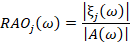
Where
ξj(ω) is the
complex amplitude of motion in degree of freedom j (e.g., heave, pitch), and A(ω) is the wave
amplitude at angular frequency ω. To evaluate how the ship performs in a realistic
wave environment, irregular sea conditions are modeled using wave energy
spectra such as Pierson-Moskowitz or JONSWAP
|
|
(7) |
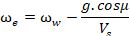
Where
ωe is
the encounter frequency (rad/s), ωw is the wave frequency (rad/s), g is the
gravitational acceleration (m/s2), Vs is the ship speed, and μ is the wave
heading (o). In the case where the vessel is at zero speed (i.e., stationary),
the encounter frequency equals the wave frequency. The wave energy spectrum
applied in this analysis is the Pierson-Moskowitz spectrum, commonly used to
model fully developed seas. It is defined as:
|
|
(8) |

Where
S(ω)
is the wave spectral density, Hs is the significant wave height, ω is the
angular wave frequency, and A and B are empirical constants. The ship’s motion
response in that sea condition is then statistically evaluated using spectral
moments of the motion response function:
|
|
(9) |
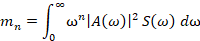
Where
mn is the nth spectral moment, S(ω) is the wave spectral density
function, and ∣RAO(ω)∣ is
the modulus of the motion RAO
2.4
Human Comfort Index
Human
comfort on board ships is strongly influenced by vessel motions, which can lead
to both physical discomfort and operational disruptions. Two widely recognized
measures used to evaluate these effects are Motion Sickness Incidence (MSI) and
Motion-Induced Interruptions (MII). MSI reflects the degree of discomfort
experienced by passengers and crew due to motion-induced seasickness, while MII
represents the frequency of activity disruptions caused by the need to maintain
balance during excessive ship motions. Together, these indices provide a
comprehensive assessment of how vessel dynamics affect comfort, safety, and
efficiency at sea. In general, MSI is defined as the percentage of the total
number of passengers and crew expected to experience vomiting as a result of
seasickness after sailing for two hours in adverse weather conditions.
Passenger comfort can also be quantified through this index by referring to the
ISO-2631/1997 standard
|
MSI= 100 [ |
(10) |
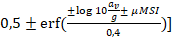
In
this study, the Motion Sickness Incidence (MSI) is represented as indexMSI,
which is calculated using the error function (erf). The primary input for this
calculation is the average vertical acceleration (av) at a specified
point or location on the ship. Additionally, the parameter μMSI is
determined based on Equation (11), which provides the necessary reference value
for evaluating MSI under varying motion conditions.
|
|
(11) |


IndexSM
(Subjective Magnitude) is a scale to assess the severity of Motion Sickness
Incidence symptoms. SM index can be calculated by equation 12
|
SM = A 1.43 |
(12) |

Where
A is a parameter that is a function of frequency, which can be calculated by
the equations (13) & (14)
|
A = x |
(13) |
|
|
(14) |



The
MSI assessment categories are based on a range of values, concluded in Table 4.
Tab. 4
MSI value range
|
MSI Range (SM) |
Status |
|
0 - 5 |
Moderate |
|
5 - 10 |
Caution |
|
10 - 15 |
Extreme |
|
15 - 20 |
Dangerous |
|
>20 |
Very Risky |
Meanwhile,
Motion-Induced Interruptions (MII) refer to situations in which crew members
are forced to pause their activities or tasks in order to stabilize themselves
by holding onto the ship’s structure. Such interruptions typically arise from
excessive ship motions that compromise balance, with common consequences
including slipping or loss of stability while moving on board. To better
illustrate the severity of these events, Table 5 presents the categorization of
MII risk levels, expressed in terms of both interruptions per hour and per
minute.
Tab. 5
MII risk level
|
MSI Range |
MII per hour |
MII per minute |
|
Possible |
6 |
0.1 |
|
Probable |
30 |
0.5 |
|
Serious |
90 |
1.5 |
|
Severe |
180 |
3.5 |
|
Extreme |
300 |
5.0 |
3. RESULTS AND DISCUSSION
3.1
RAO Analysis
The RAO curves illustrate the dynamic response of the
Ro-Ro ferry to wave excitation across different encounter frequencies and
headings (0°, 90°, and 180°). The results highlight that the vessel exhibits
frequency-dependent sensitivity, with distinct peaks corresponding to its
natural motion periods. RAO curves for stationary condition (0 speed) are shown
in Figure 8. For heave and pitch, the RAO values show amplification at lower to
mid-frequency ranges, particularly in head seas (180°). This behavior reflects
resonance with the ship’s natural vertical motions, where longer waves induce
significant displacement. The peak RAO in heave and pitch underlines the
influence of vessel length and hull form, indicating that the ferry is more
susceptible to wave energy when the encounter period approaches its natural
oscillation period. In contrast, roll RAOs demonstrate the most critical
behavior in beam seas (90°). The response is markedly higher compared to head
and following seas, with RAO values exceeding unity over a broader frequency
range. This result emphasizes the vessel’s vulnerability to lateral wave
action, where rolling motions dominate and present risks for passenger comfort
and cargo safety. The amplification in roll responses is consistent with the high
center of gravity and unique load distribution of Ro-Ro ferries, which reduce
roll stability margins. At following seas (0°), the RAO values remain
comparatively moderate across motions, with no significant amplification peaks. This suggests
that, under these conditions, wave excitation tends to align with the vessel’s
forward motion, producing less severe vertical and rolling responses. The RAO
transfer functions presented in the charts are expressed in a non-dimensional
form. This means that each motion response has been normalized against the
corresponding wave amplitude, allowing the results to be represented as ratios.
For heave, the RAO is given in units of displacement per wave amplitude (m/m),
while for pitch and roll, the responses are expressed in angular displacement
per wave slope (deg/deg). By presenting the RAOs in this non-dimensional
manner, the results become independent of the actual wave height, enabling
direct comparison across different motions and operational conditions.
|
|
|
|
(a) |
(b) |
|
(c) |
|
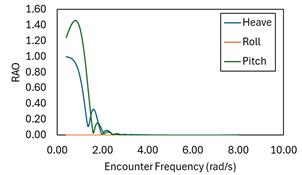
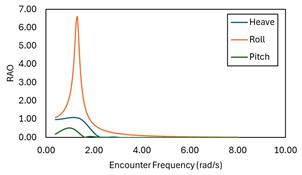
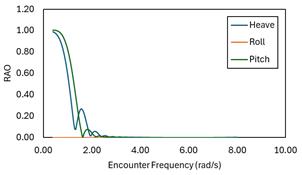
Fig. 8.
Ro-ro ship RAO at 0 speed and each heading;
(a) Following Sea, (b) Beam Sea, (c) Head Sea
RAO
for a ship in operational speed condition (12 kn) is shown in Figure 9. For
heave and pitch, the RAO values show amplification at lower to mid-frequency
ranges, particularly in head seas (180°). This behavior reflects resonance with
the ship’s natural vertical motions, where longer waves induce significant
displacement. The peak RAO in heave and pitch underlines the influence of
vessel length and hull form, indicating that the ferry is more susceptible to
wave energy when the encounter period approaches its natural oscillation
period. In contrast, roll RAOs demonstrate the most critical behavior in beam
seas (90°). The response is markedly higher compared to head and following
seas, with RAO values exceeding unity over a broader frequency range. This
result emphasizes the vessel’s vulnerability to lateral wave action, where
rolling motions dominate and present risks for passenger comfort and cargo
safety. The amplification in roll responses is consistent with the high center
of gravity and unique load distribution of Ro-Ro ferries, which reduce roll
stability margins. At following seas (0°), the RAO values remain comparatively
moderate across motions, with no significant amplification peaks. This suggests
that, under these conditions, wave excitation tends to align with the vessel’s
forward motion, producing less severe vertical and rolling responses. Overall,
the RAO analysis demonstrates that while the Ro-Ro ferry performs adequately in
head and following seas, beam sea encounters result in amplified roll
responses, which could significantly impact MSI and MII. These findings
reinforce the importance of operational planning to minimize beam sea exposure
and highlight potential areas for design improvements, such as the incorporation
of roll stabilization devices.
|
|
|
|
(a) |
(b) |
|
(c) |
|
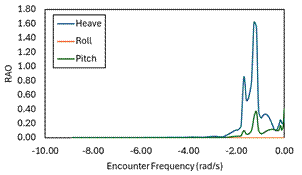
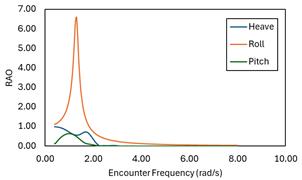
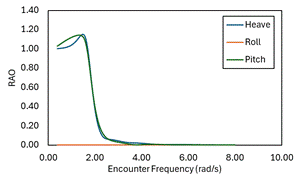
Fig. 9.
Ro-ro ship RAO at12 Kn speed and each heading;
(a) Following Sea, (b) Beam Sea, (c) Head sea
The
RAO results at 0 knots provide a useful baseline for understanding the vessel’s
natural motion characteristics, while the comparison with 12 knots reveals how
forward speed influences the encounter frequency and overall responses. In head
seas (180°), the heave and pitch RAOs at 0 knots show distinct peaks near the
natural vertical motion periods, reflecting resonance with longer waves. When
the vessel advances at 12 knots, the encounter frequency shifts toward shorter
periods, causing the RAO peaks to move to the right and, in some cases, narrow.
This shift generally reduces the amplitude of vertical motions at longer
periods but can increase the severity if the operating speed brings the vessel
closer to resonance. Roll remains minimal in head seas at both speeds,
indicating limited vulnerability in this heading. In beam seas (90°), the roll
RAO is the dominant response. At 0 knots, a strong peak is observed near the
roll natural frequency, while at 12 knots the peak shifts slightly due to the
encounter-frequency effect. Although forward speed can introduce additional
damping that may reduce the amplitude of the peak, the response often broadens
across a wider frequency range, maintaining roll as the most critical motion
for comfort and operability. Heave and pitch motions in beam seas remain
secondary compared to roll, with only minor differences between 0 and 12 knots.
In following seas (0°), the RAO behavior is markedly different: at 0 knots, the
vessel experiences vertical motion peaks similar to the head-sea case, but at
12 knots the encounter frequency decreases as waves approach from astern,
shifting the peaks to longer periods and generally reducing their amplitude. As
a result, forward speed tends to alleviate vertical motions in following seas,
improving both comfort and operability.
3.2
Seakeeping Motion
The comparison of RMS motions between wave heights of 3.0
m and 3.5 m clearly demonstrates the sensitivity of the Ro-Ro ferry’s responses
to sea state severity. A comparison between wave heights can be seen in Figure
10. For heave motions, the RMS values increase consistently with wave height
across all headings, indicating the direct influence of wave energy on vertical
displacements. The most significant increments are observed in beam seas, where
the RMS heave rises from 0.77 m to 0.90 m at 0 kn and from 0.68 m to 0.79 m at
12 kn. This shows that larger waves acting laterally on the hull produce
stronger vertical oscillations. In head seas, the heave motion also increases
with wave height, particularly at service speed, suggesting that advancing
against longer, steeper waves induce stronger vertical excitations. Pitch
motions are even more sensitive to wave height. In following seas, RMS pitch
increases from 3.44° to 4.01° at 0 kn, while in head seas it grows from 2.23°
to 2.60° at the same condition. These increments underline that longer-period
waves at higher sea states strongly excite the vessel’s longitudinal
oscillations, especially when wave crests align with the vessel’s length.
For roll motions, the effect of
wave height is dominant only in beam seas, where RMS values rise from 9.58° to
11.18°, a level significantly exceeding the comfort threshold. Both following
and head seas result in negligible roll regardless of wave height, as expected
for longitudinal wave incidence. The results highlight that increases in sea
state exacerbate all motions but affect each differently: heave and pitch grow
across all headings, while roll is almost exclusively dictated by beam seas.
This finding is similar to the study by Ariani et al.
The effect of ship speed reveals distinct behaviors
between vertical and transverse motions, visible in Figure 11. For heave,
increasing speed from 0 kn to 12 kn generally reduces responses in following
and beam seas but increases them in head seas. At a 3.5 m wave height, heave
grows from 0.76 m at 0 kn to 0.88 m at 12 kn in head seas, showing that forward
motion enhances vertical excitation when encountering waves directly. This
behavior is linked to the Doppler shift in encounter frequency, where advancing
speed moves the vessel closer to resonance in head seas, as also presented in
Ariani et al.’s study
|
|
|
|
(a) |
(b) |
|
(c) |
|
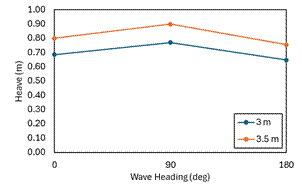
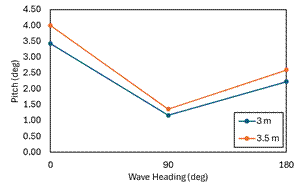
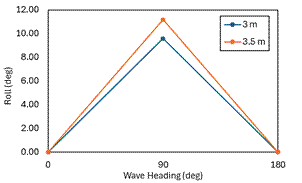
Fig. 10.
RMS comparison between wave height at each wave heading;
(a) Heave, (b) Pitch, (c) Roll
|
|
|
|
(a) |
(b) |
|
(c) |
|
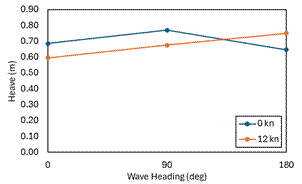
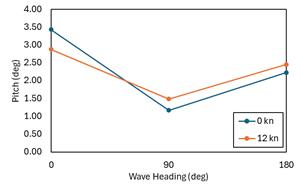
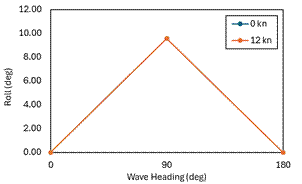
Fig. 11.
RMS comparison between ship speed at each wave heading;
(a) Heave, (b) Pitch, (c) Roll
|
|
|
|
(a) |
(b) |
|
(c) |
|
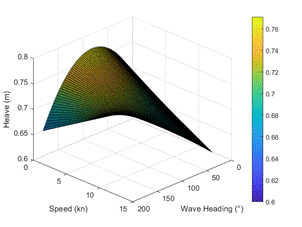
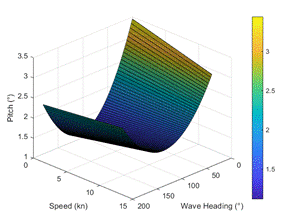
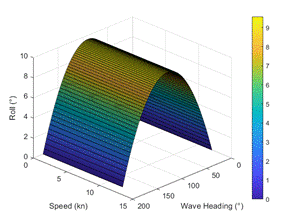
Fig. 12.
Effect comparison between ship speed and wave heading on each motion;
(a) Heave, (b) Pitch, (c) Roll
When analyzing the combined effect of ship speed and wave
heading in Figure 12, clear patterns emerge that distinguish vertical plane
responses from transverse motions. For heave, the highest RMS values
consistently occur in beam seas across both speeds, reflecting the strong
excitation from lateral wave action on the ferry’s broad beam. In head seas,
heave increases significantly at 12 kn compared to 0 kn, confirming that
advancing speed enhances vertical accelerations when meeting waves head-on.
Following seas show the opposite effect, with lower heave at higher speeds due
to reduced relative encounter frequency. Pitch motions present a more complex
interaction. At 0 kn, following seas produce the largest RMS pitch values, with
4.01° observed at 3.5 m wave height. However, at 12 kn the head-sea response
becomes more severe, with pitch rising to 2.87°, while following-sea pitch
decreases to 3.36°. This indicates that forward speed shifts the dominant
excitation of pitch from following to head seas. In contrast, roll motions
remain almost exclusively dependent on heading. Beam seas consistently produce
extreme values of 9.58° at 3.0 m and 11.18° at 3.5 m, regardless of speed. Both
following and head seas contribute negligibly to roll, confirming the predominance
of lateral wave incidence. This combined analysis highlights that while speed
modulates heave and pitch depending on heading, roll remains entirely governed
by wave direction, reinforcing its role as the most critical motion response
for Ro-Ro ferries. The interaction between wave height and heading, visualized
in Figure 13, emphasizes how sea state severity amplifies motion responses,
though the extent varies by motion type. For heave, increases in wave height
result in higher RMS values across all headings, with the most pronounced
responses occurring in beam seas and head seas at service speed. This
underscores that larger seas amplify vertical displacements most significantly
when the vessel faces or is struck laterally by waves. Pitch motions show
strong sensitivity to wave height, particularly in following seas, where RMS
pitch increases from 3.44° to 4.01° at 0 kn, reflecting the resonance between
wave length and ship length. In head seas, higher wave heights also amplify
pitch, particularly at 12 kn, further indicating that speed magnifies vertical
plane responses under severe conditions. For roll, the effect of wave height is
concentrated entirely in beam seas, where RMS values grow from 9.58° to 11.18°.
Such high roll amplitudes exceed both comfort and safety thresholds,
highlighting beam seas as the most limiting condition for Ro-Ro ferry
operations. Neither following nor head seas produce meaningful roll responses,
regardless of wave height, confirming the directional dependence of transverse
stability. Overall, the results show that wave height exacerbates all motions
but with distinct patterns: heave and pitch are amplified across headings,
particularly under head seas at speed, while roll is almost entirely driven by
beam seas, where higher sea states lead to dangerous levels of motion severity.
|
|
|
|
(a) |
(b) |
|
(c) |
|
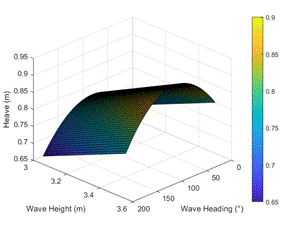
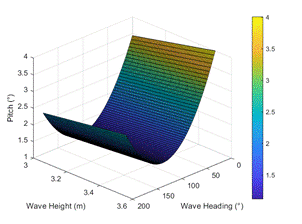
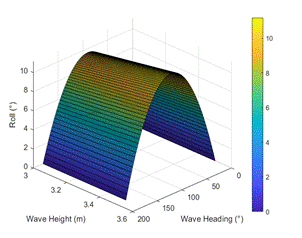
Fig. 13.
Effect comparison between ship speed and wave heading on each motion;
(a) Heave, (b) Pitch, (c) Roll
3.3
Human comfort index
The
comfort level of passengers and ship crew can be seen from various parameters,
namely the SM index and MSI percentage, as well as MII/hour. Each of these
parameters is based on the location point that has been inputted into motion
with various conditions, namely variations in ship speed, angle of direction of
arrival of waves, and different wave heights, the results of the analysis are
as follows.
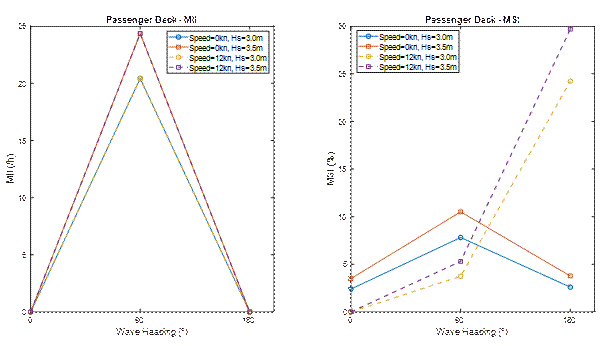
Fig. 14.
MII and MSI conditions of each operational conditions on the passenger deck
On
the passenger deck, the analysis reveals distinct patterns between activity
disruption (MII) and seasickness incidence (MSI), shown in Figure 14. MII shows
a sharp peak in beam seas at 90°, where the values exceed 20 interruptions per
hour under both 3.0 m and 3.5 m wave conditions. This indicates that passengers
are most likely to experience difficulty moving around the vessel in side
waves, which can interfere with walking, carrying belongings, or performing
routine activities. By contrast, following seas (0°) and head seas (180°)
result in negligible MII, suggesting that longitudinal wave directions impose
little impact on passenger mobility. In terms of MSI, the results highlight a
strong influence of ship speed. At 0 knots, MSI values remain moderate, ranging
between 7-11% across headings, with beam seas producing the most discomfort.
However, when the vessel operates at 12 knots, head seas become the most
critical condition. Under 3.5 m waves, MSI rises dramatically to nearly 30%,
meaning that almost one-third of passengers could be affected by seasickness.
Thus, while beam seas disrupt activities through MII, head seas at service
speed present the greatest risk to passenger comfort due to high MSI. The
navigation deck, located at the highest level above the vessel’s center of
gravity, experiences the most severe motion effects of all decks, which can be
seen in Figure 15. Motion-Induced Interruptions again peak under beam seas at
90°, with values surpassing 30-35 interruptions per hour in 3.5 m waves. At
this level, such extreme MII means that crew members could face significant
difficulty performing operational duties on the bridge, including navigation,
equipment handling, and maintaining situational awareness. For MSI, the
navigation deck proves even more critical. At 0 knots, MSI remains relatively
low at 5-7%, showing that stationary operations do not strongly impact crew
comfort. Yet at 12 knots, head seas amplify motion sickness risks dramatically.
In 3.5 m waves, MSI values rise to more than 35%, the highest across all decks.
Such conditions would seriously compromise crew health and effectiveness,
potentially impairing decision-making and safety. This suggests that, while
beam seas are the most problematic for MII, head seas at higher speeds pose the
greatest threat to sustained crew performance on the navigation deck.
The
vehicle deck, positioned closest to the vessel’s center of gravity, experiences
significantly lower motion responses compared to the upper decks, as visualized
in Figure 16. MII responses on this deck remain relatively small even in beam
seas, peaking at only 3-5 interruptions per hour under 3.5 m wave conditions.
This reduced sensitivity reflects the deck’s proximity to the roll axis,
minimizing the lateral displacements that drive activity disruption. From an
operational perspective, this means vehicles and cargo are less likely to shift
significantly, although some risk persists under strong beam seas. For MSI, the
vehicle deck shows moderate but noteworthy values. At 0 knots, MSI remains low,
between 4-6% across headings. However, at 12 knots in head seas, MSI climbs to
between 20-27% in 3.5 m waves. Although these values are lower than those on
the navigation deck, they remain operationally significant, particularly for
crew working on or near the vehicle deck during rough sea conditions. Overall,
while the vehicle deck is least affected by motion compared to the passenger
and navigation decks, head seas at higher speeds still present a considerable
risk of discomfort and seasickness for the condition.
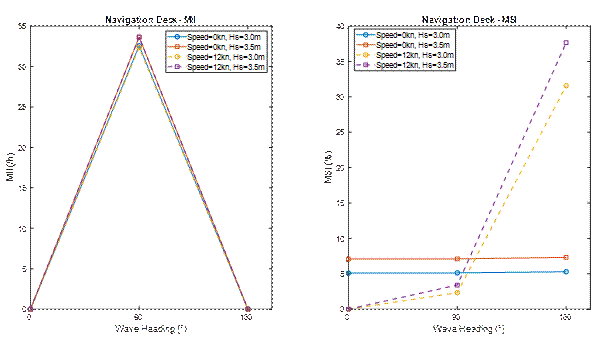
Fig. 15.
MII and MSI conditions of each operational conditions on the navigation deck
When
comparing motion effects across the three decks, a clear relationship emerges
between vertical location on the ship and the severity of responses. The
navigation deck, being the highest above the center of gravity, experiences the
strongest amplification of both MII and MSI, making it the most critical area
in terms of crew comfort and safety. The passenger deck shows intermediate
responses, where MII peaks in beam seas and MSI peaks in head seas, indicating
that passengers are vulnerable to both activity disruption and seasickness
depending on the wave direction and ship speed. By contrast, the vehicle deck
located closest to the roll axis experiences the least severe responses, with
MII remaining relatively small and MSI only becoming problematic under head
seas at service speed. These findings demonstrate that both vertical location
and operational conditions strongly govern the comfort and safety outcomes on
Ro-Ro ferries. Beam seas primarily drive high MII, disrupting activities on the
passenger and navigation decks, while head seas at service speed pose the greatest
risk for MSI, particularly on the navigation deck where seasickness incidence
reaches critical levels. The vehicle deck benefits from its low vertical
position but still faces challenges under unfavorable conditions. Collectively,
the results emphasize the need to carefully consider deck layout, speed
selection, and route planning in order to mitigate passenger discomfort and
ensure safe, efficient operations for crew and cargo.
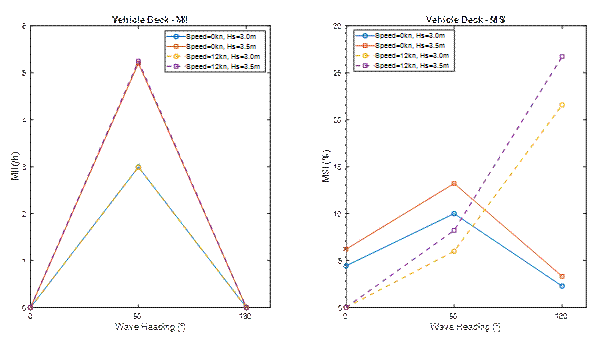
Fig. 16.
MII and MSI conditions of each operational conditions on the vehicle deck
The
results of this study can be validated by earlier research conducted on ship
motion and passenger comfort. Scamardella and Piscopo
The
findings of this study highlight two main operational challenges for Ro-Ro
ferries: excessive roll in beam seas, which results in high MII, and elevated
MSI in head seas at service speeds. To mitigate these issues, both design
modifications and operational measures can be employed. From a design
perspective, the application of motion-reducing appendages has proven effective
in improving seakeeping performance. For instance, a computational study on a
1200 GT passenger vessel demonstrated that fitting a NACA 4412 stern foil
reduced resistance by 3.6% while also significantly decreasing heave and pitch
amplitudes, thereby improving passenger comfort in head seas
4. CONCLUSIONS
This study analyzed
the motion responses, Motion Sickness Incidence (MSI), and Motion-Induced
Interruptions (MII) of a Ro-Ro ferry using strip theory under varying operating
conditions. The simulations considered wave heights of 3.0 m and 3.5 m, vessel
speeds of 0 knots and 12 knots, and wave headings of following seas (0°), beam
seas (90°), and head seas (180°). The analysis was carried out at three
representative locations on board: the passenger deck, the navigation (crew)
deck, and the vehicle deck, ensuring that both comfort and safety aspects could
be evaluated in relation to international criteria. The results show that the
ship’s motion responses generally met the NORDFORSK (1987) operability limits
under following and head sea conditions. However, under beam sea conditions,
the roll motion exceeded the allowable limit, reaching values between 3.97° and
5.6°, which highlights a significant vulnerability to lateral wave excitation.
From the MSI analysis based on ISO 2631 criteria, passenger and crew exposure
was found to remain within the moderate (tolerable) category for most
conditions, both in still and service speed. An exception was observed at 12
knots in head seas, where MSI levels reached the alert category, suggesting a
potential risk for passenger discomfort. The evaluation of MII further
indicated that both passenger and crew activities could generally continue
without major disruption in following and head seas, as the conditions were
classified as possible (feasible). In contrast, beam sea conditions again
presented the most critical scenario, particularly on the passenger and vehicle
decks, where the MII values reached the probable category, signifying a higher
likelihood of interruptions to standing and walking activities. Overall, the study
highlights that while the Ro-Ro ferry maintains acceptable motion and comfort
performance in most operating conditions, beam sea encounters remain a critical
challenge due to excessive rolling, leading to increased motion sickness risk
and activity disruption.
These findings
emphasize the importance of considering human comfort and safety, alongside
vessel stability, in the design and operational planning of Ro-Ro ferries. From
a design perspective, improvements such as the implementation of bilge keels,
active stabilizer fins, or optimized hull form modifications could be
considered to reduce roll amplitudes. In addition, careful distribution of
passenger and vehicle loads on the main deck could help lower the ship’s
vertical center of gravity and enhance overall stability. From an operational
standpoint, voyage planning plays a crucial role in minimizing discomfort and
risk. Avoiding prolonged exposure to beam seas, adjusting vessel speed when
encountering rough head seas, and selecting routes that reduce direct lateral
wave impact can significantly improve onboard comfort. Furthermore, real-time
monitoring of motion responses may be applied as part of safety management to
determine operational limits for both crew and passengers. Together, these
design improvements and operational strategies can provide a more comprehensive
framework for ensuring that Ro-Ro ferries operate not only within technical
stability standards but also in ways that safeguard passenger comfort and safety.
References
1.
Betty A., R.C. Ariesta, A. Wildani, H. Hakim,
M. Oktaviani. 2023. “Ship performance investigation due to deadrise
modification: A case study passenger ship”. Journal of Applied Engineering
Science 21(2): 608-617. DOI: https://doi.org/10.5937/jaes0-41234.
2.
Ariesta R.C., M.H.N. Aliffrananda, S. Riyadi,
I.K.A.P. Utama. 2021. “An investigation into the justification of the service
speed of Ro-Ro ferry with block coefficient 0.8 based on the resistance and
seakeeping performance”. Proceedings of the 7th International Conference on
Ship and Offshore Technology (ICSOT). Surabaya, Indonesia, 19-20 November
2021. DOI: https://doi.org/10.3940/rina.icsotindonesia.2021.15.
3.
Asmara I.P.S., Sumardiono, M. Adam. 2021. “Seakeeping
and resistance analysis of 1200 GT passenger ship fitted with NACA 4412 stern
foil using CFD method”. IOP Conference Series: Materials Science and
Engineering 1175(1): 012002. DOI: https://doi.org/10.1088/1757-899X/1175/1/012002.
4.
Begović E., E.D. Valentina, F. Mauro, R.
Nabergoj, B. Rinauro. 2023. “The impact of different bow shapes on large yacht
comfort”. Journal of Marine Science and Engineering 11(3): 495. DOI: https://doi.org/10.3390/jmse11030495.
5.
Bhattacharyya R. 1978. Dynamics of Marine
Vehicles. Maryland: U.S. Naval Academy.
6.
Bielicki S. 2021. “Prediction of ship motions
in irregular waves based on response amplitude operators evaluated
experimentally in noise waves”. Polish Maritime Research 28(1): 16-27.
DOI: https://doi.org/10.2478/pomr-2021-0002.
7.
Bunnik T., E. van Daalen, G. Kapsenberg, Y.
Shin, R. Huijsmans, G. Deng, G. Delhommeau, M. Kashiwagi, B. Beck. 2010.
“A comparative study on state-of-the-art prediction tools for seakeeping”. Proceedings
of the 28th Symposium on Naval Hydrodynamics. Pasadena, California, USA,
14 September 2010.
8.
Corigliano P., F. Frisone, C. Chianese, M.
Altosole, V. Piscopo, A. Scamardella. 2024. “Fatigue overview of ship
structures under induced wave loads”. Journal of Marine Science and
Engineering 12(9): 1608. DOI: https://doi.org/10.3390/jmse12091608.
9.
Cui T., O. Turan, E. Boulougouris. 2016.
“Development of a ship weather routing system for energy efficient shipping”. Proceedings
of the Annual Conference of the International Association of Maritime
Economists. Hamburg, Germany, 23-26 June 2016.
10.
Dewi I.K., D. Chrismianto, B.A. Adietya. 2019.
“Analysis of stability, seakeeping, motion sickness incidence (MSI), and
motion-induced interruptions (MII) of Ro-Ro ferries of 500 GT, 1100 GT, and
1300 GT in Aceh waters”. Journal Teknik Perkapalan 7(4): 236-247.
11.
Djatmiko E.B. 2012. Behavior and Operability
of Offshore Structures in Random Waves. Surabaya: ITS Press.
12.
Fang C.C., H.S. Chan. 2007. “An investigation
on the vertical motion sickness characteristics of a high-speed catamaran
ferry”. Ocean Engineering 34(14-15): 1909-1917. DOI: https://doi.org/10.1016/j.oceaneng.2007.04.001.
13.
Fitriadhy A., N.S. Razali, N.A. Mansor. 2017.
“Seakeeping performance of a rounded hull catamaran in waves using CFD
approach”. Journal of Mechanical Engineering and Sciences 11(2):
2601-2614. DOI: https://doi.org/10.15282/jmes.11.2.2017.4.0238.
14.
Graham R. 2009. “Motion-induced interruptions
as ship operability criteria”. Naval Engineers Journal: 65-71. DOI: https://doi.org/10.1111/j.1559-3584.1990.tb02556.x.
15.
IMO. 1997. IMO and Ro-Ro Safety: Focus on
IMO. London: International Maritime Organization.
16.
ISO. 1997. ISO 2631-1:1997 Mechanical
Vibration and Shock – Evaluation of Human Exposure to Whole-Body Vibration.
17.
ITTC. 2021. Uncertainty Analysis in CFD
Verification and Validation Methodology and Procedures. International
Towing Tank Conference 7.5-03-01-01.
18.
Jifaturrohman M.I., I.K.A.P. Utama, T.
Putranto, D. Setyawan, L. Huang. 2024. “A study into the correlation between
single array-hull configurations and wave spectrum for floating solar
photovoltaic systems”. Ocean Engineering 312: 119312. DOI: https://doi.org/10.1016/j.oceaneng.2024.119312.
19.
Lee U.J., W.M. Jeong, H.Y. Cho. 2022.
“Estimation and analysis of JONSWAP spectrum parameter using observed data
around Korean coast”. Journal of Marine Science and Engineering 10(5):
578. DOI: https://doi.org/10.3390/jmse10050578.
20.
Li A., Y. Li. 2019. “Numerical and experimental
study on seakeeping performance of a high-speed trimaran with T-foil in head
waves”. Polish Maritime Research 26(3): 65-77. DOI: https://doi.org/10.2478/pomr-2019-0047.
21.
Lin Y.H., C.W. Lin. 2019. “Numerical simulation
of seakeeping performance on the preliminary design of a semi-planing craft”. Journal
of Marine Science and Engineering 7(7): 199. DOI: https://doi.org/10.3390/jmse7070199.
22.
Lloyd A. 1998. Seakeeping: Ship Behaviour in
Rough Weather. California: Horwood Publishing.
23.
Luhulima R.B., I.K.A.P. Utama, Sutiyo, B.
Suwasono. 2018. “CFD analysis into the correlation between resistance and
seakeeping of trimaran configuration”. Proceedings of Marine Safety and
Maritime Installation (MSMI 2018): 338-348.
24.
Manik P. 2012. “Analysis of ship seakeeping
motions in regular waves”. Kapal: Jurnal Ilmu Pengetahuan dan Teknologi
Kelautan 4(1): 1-10. DOI: https://doi.org/10.14710/kpl.v4i1.2650.
25.
Meiliana S.W., H. Syahab, A.I. Wulandari,
I.K.A.P. Utama. 2024. “The influence of slow steaming on fuel usage and carbon
emissions of container ships: A case study of the Surabaya-Makassar route”. Journal
of Marine-Earth Science and Technology 5(3): 62-68. DOI: https://doi.org/10.12962/j27745449.v5i3.1426.
26.
Misra S.C. 2016. Design Principles of Ships
and Marine Structures. Boca Raton: Taylor & Francis Group.
27.
Seol N., J.C. Park, J.B. Park, H.K. Yoon. 2022.
“CFD-modified potential simulation on seakeeping performance of a barge”. Water
14(20): 3271. DOI: https://doi.org/10.3390/w14203271.
28.
Nguyen V.M., M. Jeon, H.K. Yoon. 2016. “Study
on the optimal weather routing of a ship considering parametric rolling,
slamming and deck wetness”. Proceedings of the 13th
International Symposium on Practical Design of Ships and Other Floating
Structures (PRADS 2016), Copenhagen, Denmark.
29.
Park D.W., K. Lee, J. Seo. 2024. “Evaluation of
the seakeeping performance indices for enhancing crew safety and workability
in small fishing vessels”. Journal of Ocean Engineering and Technology
38(6): 336-349. DOI: https://doi.org/10.26748/KSOE.2024.068.
30.
Pennino S., S. Gaglione, A. Innac, V. Piscopo,
A. Scamardella. 2020. “Development of a new ship adaptive weather routing
model based on seakeeping analysis and optimization”. Journal of Marine
Science and Engineering 8(4): 270. DOI: https://doi.org/10.3390/jmse8040270.
31.
Piscopo V., A. Scamardella. 2015. “The overall
motion sickness incidence applied to catamarans”. International Journal of
Naval Architecture and Ocean Engineering 7(4): 655-669. DOI: https://doi.org/10.1515/ijnaoe-2015-0046.
32.
Rizal N., D.P. Sari, B. Cahyono, D.D. Prastyo, B. Ali,
E. Arianti. 2022. “Uncertainty analysis study on seakeeping tests
of benchmark model”. IOP Conference Series: Earth and Environmental Science
1081(1): 012021. DOI: https://doi.org/10.1088/1755-1315/1081/1/012021.
33.
Samuel, A. Trimulyono, P. Manik, D.
Chrismianto. 2021. “A numerical study of spray strips analysis on Fridsma hull
form”. Fluids 6(11): 420. DOI: https://doi.org/10.3390/fluids6110420.
34.
Santoso M. 2015. “Prediction analysis of motion
sickness incidence (MSI) on a 1000 GT catamaran at the initial design stage”.
Kapal: Jurnal Ilmu Pengetahuan dan Teknologi Kelautan 12(1): 42-49.
35.
Scamardella A., V. Piscopo. 2014. “Passenger
ship seakeeping optimization by the overall motion sickness incidence”. Ocean
Engineering 76: 86-97. DOI: https://doi.org/10.1016/j.oceaneng.2013.12.005.
36.
Song K., J. Gong, J. Ma, Q. Xu, Y. Shi, F. Xu.
2024. “Numerical study on the influence of interceptor and stern flap on ship
resistance and motion response in regular waves”. Journal of Marine Science
and Engineering 12(6): 929. DOI: https://doi.org/10.3390/jmse12060929.
37.
Sun Y., D. Zhang, Y. Wang, Z. Zong, Z. Wu.
2023. “Model experimental study on a T-foil control method with anti-vertical
motion optimization of the mono hull”. Journal of Marine Science and
Engineering 11(8): 1551. DOI: https://doi.org/10.3390/jmse11081551.
38.
Tezdogan T., A. Incecik, O. Turan. 2014.
“Operability assessment of high speed passenger ships based on human comfort
criteria”. Ocean Engineering 89: 32-52. DOI: https://doi.org/10.1016/j.oceaneng.2014.07.009.
39.
Tran T.G., V.T. Doan, H. Tran. 2025. “A new
approach to improving the accuracy of seakeeping predictions using strip
theory for high-speed vessels”. Ocean Engineering 327: 120995. DOI: https://doi.org/10.1016/j.oceaneng.2025.120995.
40.
Wulandari A.I., Alamsyah, Suardi, W. Setiawan,
M.U. Pawara, A.M.N. Arifuddin, H. Syahab. 2025. “Material reliability study of
high-speed small craft under wave load”. Journal of Marine-Earth Science
and Technology 5(3): 74-86.
41.
Wulandari A.I., A. Sulisetyono, I.K.A.P. Utama.
2025. “The influence of hull and tunnel geometry on resistance and seakeeping
behavior of flat side-inside catamaran”. Ships and Offshore Structures:
1-35. DOI: https://doi.org/10.1080/17445302.2025.2529968.
42.
Wulandari A.I., I.K.A.P. Utama, A. Sulisetyono,
B. Ali, P. Virliani, E. Arianti, Nurhadi, M.A. Mudhoffar, A.K. Arifah, H. Zen.
2024. “Seakeeping performance of warship catamaran under varied hull
separation and wave heading conditions”. Pomorstvo 38(2): 275-296. DOI:
https://doi.org/10.31217/p.38.2.9.
43.
Zhai M., Z. Jin, Z. Yan, Z. Gu, Z. Li, D. Xiao.
2024. “Heuristic-based vehicle arrangement for Ro-Ro ships”. Scientific
Reports 14(1): 30889. DOI: https://doi.org/10.1038/s41598-024-81234-z.
Received 08.04.2026; accepted in
revised form 27.05.2026

Scientific
Journal of Silesian University of Technology. Series Transport is licensed
under a Creative Commons Attribution 4.0 International License