Article citation information:
Nguyen Xuan, K., Nguyen Anh, N. Experimental
data-driven prediction of main fuel injection quantity using Artificial Neural
Networks and Gradient Boosting Machines. Scientific
Journal of Silesian University of Technology. Series Transport. 2026, 131, 165-176. ISSN: 0209-3324. DOI:
https://doi.org/10.20858/sjsutst.2026.131.10
Khoa NGUYEN XUAN[1],
Ngoc NGUYEN ANH[2]
EXPERIMENTAL DATA-DRIVEN PREDICTION OF MAIN FUEL INJECTION QUANTITY
USING ARTIFICIAL NEURAL NETWORKS AND GRADIENT BOOSTING MACHINES
Summary. Accurate prediction of the main fuel injection
quantity is essential for performance optimization, fault diagnosis, and
emission control in common rail diesel injection systems. While artificial
neural networks (ANNs) have been widely applied to model nonlinear engine behaviors, the application of Gradient Boosting Machines
(GBMs) for injection quantity prediction remains limited. This study presents a
systematic comparison between ANN and GBM for predicting the main fuel
injection flow rate using experimental injector test bench data. A dataset of
456 samples was collected under a wide range of operating conditions, including
rail pressure, injection pulse width, injection frequency, and operating modes.
The models were trained using 80% of the data and evaluated on the remaining
20% using R², RMSE, and MAE metrics. Both models achieved high predictive
accuracy, with R² values exceeding 0.98 on the test dataset. However, the
GBM consistently outperformed the ANN, reducing RMSE and MAE by up to 2.4% and
6.5%, respectively, on unseen data, and exhibiting a narrower error
distribution. These results demonstrate the superior accuracy, robustness, and
generalization capability of the GBM for fuel injection quantity prediction.
Keywords: common rail,
Artificial Neural Networks, Gradient Boosting Machine, injection speed,
injection pressure
1. INTRODUCTION
Although
electric vehicles are increasingly widespread and strongly promoted, by the end
of 2023 there were still more than 1.4 billion internal combustion engine (ICE)
vehicles operating worldwide. Among them, diesel engines continue to play a
crucial and largely irreplaceable role in many transportation sectors,
particularly for heavy-duty applications that require high power output, large
payload capacity, and durability under harsh operating conditions. However, the
major drawback of diesel engines lies in their pollutant emissions. In response
to growing environmental concerns, many countries and international
organizations have introduced increasingly stringent emission regulations [1],
thereby imposing urgent demands for technological advancements in engine and
fuel supply systems.
In
this context, the common rail electronic fuel injection system has emerged as
an effective solution for improving engine performance and reducing emissions.
This technology enables precise control of high-pressure fuel injection,
thereby optimizing the combustion process, enhancing engine efficiency,
reducing fuel consumption, and mitigating harmful exhaust emissions [2]. To
ensure reliable and durable operation of the common rail system, periodic
inspection, accurate diagnosis, and early fault detection are of critical
importance. Accordingly, electronic diesel injector test equipment plays a
vital role in performing precise measurements, identifying injector
malfunctions, and supporting efficient maintenance and repair processes. Within
the electronic Common Rail fuel injection system, main fuel injection quantity
is a key parameter for evaluating injection accuracy and serves as an essential
indicator for fault diagnosis and system optimization [3,4]. Consequently,
numerous studies have focused on analyzing the
factors influencing main fuel injection quantity and developing predictive
models for this parameter. Carmen Mata et al. [5] conducted experimental
investigations and modeling of injection rate
characteristics in a Common Rail system equipped with solenoid type electronic
injectors. Experiments were carried out under various rail pressures and
injection pulse widths, enabling the acquisition of instantaneous injection
rate data and characteristic parameters such as needle opening delay, rate of
rise, peak injection rate, and needle closing behavior.
Based on the experimental data, the authors developed an open-loop physical
model incorporating nozzle flow equations, mass momentum balance, and injector
needle dynamics. Although the model successfully reproduced the general trends
of the injection rate profiles, it was found to be sensitive to modeling uncertainties, boundary conditions, and noise,
thus requiring calibration using experimental data. With the rapid advancement
of data-driven technologies, machine learning methods have increasingly been
applied to predict complex phenomena due to their flexibility, strong nonlinear
modeling capability, and high prediction accuracy.
Xiangdong Lu et al. [6] proposed a predictive model for injection rate in a
high-pressure Common Rail system of marine diesel engines by combining Quantum
Particle Swarm Optimization (QPSO) with a deep bidirectional long short-term
memory neural network. Furthermore, transfer learning with a parameter-freezing
strategy was employed to extend the model to multiple injection strategies
(pilot-main injection). The results demonstrated high prediction accuracy, low
error, and stable real-time performance, meeting the stringent requirements for
precise injection control in modern diesel engines. In automotive engineering,
artificial neural networks (ANNs) are widely recognized as effective predictive
tools due to their fast computation, high accuracy, and low implementation cost
[7]. ANNs are particularly suitable for replacing conventional simulation-based
approaches in complex and computationally expensive systems, making them a
prominent choice in engine research and applications [8,9]. Mebin Samuel et al.
[10] employed ANN models to predict performance and emission parameters of a
single-cylinder direct-injection diesel engine using experimental data from a
Common Rail Direct Injection (CRDI) engine fueled
with various blended fuels. Six output parameters brake thermal efficiency
(BTE), brake specific fuel consumption (BSFC), hydrocarbons (HC), nitrogen
oxides (NOx), carbon monoxide (CO), and smoke were predicted with coefficients
of determination (R²) ranging from 0.982 to 0.997. Similarly, Babu et al.
[11] investigated the effects of multiple injection strategies on a CRDI engine
fueled with biodiesel and conventional diesel using
ANN-based prediction, achieving high accuracy with RMSE values of 0.01-0.02 and
R² values between 0.980 and 0.998. In addition to ANN, Gradient Boosting
Machine (GBM) is a powerful machine learning approach in which predictions are
generated by combining multiple weak learners to optimize a global objective
function. Vijayaraghavan et al. [12] compared KNN, multilayer perceptron (MLP),
and LightGBM models, demonstrating that LightGBM achieved the highest prediction accuracy with an
R² of 0.990 on the test dataset. When integrated with a Natural Gradient
Boosting algorithm in an ensemble framework, the performance further
improved to an R² of 0.995, while also providing probabilistic uncertainty
estimation. Similarly, Ahmad Sharafati et al. [13] compared ABR, GBM, and RFR
models for predicting wastewater quality indicators and found that GBM
delivered superior performance for nonlinear output variables, highlighting its
robustness and predictive capability.
Despite
the growing application of machine learning techniques in automotive
engineering, most existing studies have primarily focused on artificial neural
networks, while the potential of Gradient Boosting Machine models remains
underexplored, particularly in the prediction of main fuel injection quantity
in Common Rail systems. Limited studies have comparatively evaluated ANN and
GBM models for main fuel injection quantity prediction based on experimental
injector test data under different operating conditions. The novelty of this
study lies in the comparative evaluation of ANN and GBM models for predicting
the main fuel injection quantity of Common Rail diesel injectors, together with
a quantitative comparison of prediction accuracy, robustness, and practical
applicability. The proposed approach provides valuable insights into the
applicability of machine learning techniques for fuel injection diagnosis and
optimization while significantly reducing experimental effort, cost, and
development time in diesel engine research and applications [14,15].
2. METHODOLOGY
2.1. Experimental Setup
The
experimental setup was designed to acquire measurement data from a
high-pressure common-rail (CR) fuel injection system equipped with a diesel
injector, as illustrated in Fig. 1. A dedicated electronic control unit (ECU)
was employed to adjust key operating parameters, including rail pressure,
injection frequency, pulse duration, dwell time, and control currents. Bosch
calibration fluid was used as the working medium and circulated through a
low-pressure and high-pressure pumping system before entering the common rail,
which acted as a fuel accumulator supplying the injector. Various sensors were
installed to monitor system performance: rail pressure was measured using
Kistler and Trafag sensors; fuel temperature was
monitored with Pt100 and type-K thermocouples; injector needle lift was
measured with a Micro-Epsilon displacement sensor; and current, frequency,
and flow rates were recorded using high-precision transducers. All signals were
acquired by the ECU and transmitted to a computer for data processing and
analysis. Experiments were conducted across a range of injection pressures
(300-1700 bar), injection speeds (600-1700 cycles/min), and pulse widths
(500-1700 µs), while pilot injections were limited to 200-600 µs. Data were
averaged over multiple cycles, yielding a maximum uncertainty of 0.6% and a
relative error below 5%, ensuring reliable measurement accuracy.
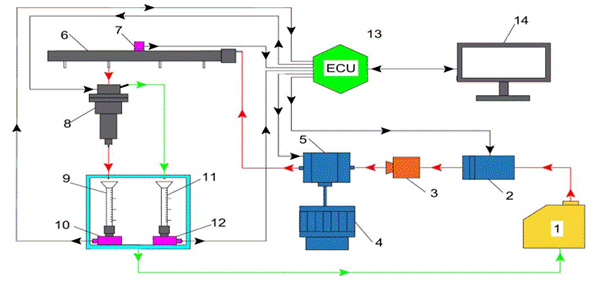
Fig.
1. Experimental setup of the common rail fuel injection system
1 – fuel tank;
2 – low-pressure pump; 3 – fuel filter; 4 – electric motor; 5 – high-pressure
pump; 6 – common rail (accumulator); 7 – rail pressure sensor; 8 – injector; 9
– injection measuring tube; 10 – injection flow sensor; 11 – return fuel line;
12 – return flow sensor;
13 – ECU (electronic control unit); 14 – computer
2.2. Artificial neural networks (ANN) and gradient
boosting machines (GBM)
In
this study, two machine learning models were employed to predict the fuel main
fuel injection quantity: artificial neural networks (ANN) and gradient boosting
machines (GBM), a regression variant of gradient boosting machines (GBM).
Both models are well suited for capturing complex nonlinear relationships in
experimental data. ANN is a machine learning approach inspired by biological
neural systems and consists of an input layer, one or more hidden layers, and
an output layer. Each neuron performs a weighted summation of the input signals
followed by a nonlinear activation function, such as Sigmoid, ReLU, or Tanh. The ANN model is trained using the
back-propagation algorithm, which involves a forward propagation stage to
generate predictions and a backward propagation stage to update network weights
by minimizing a predefined loss function. Gradient Boosting Machine (GBM),
originally proposed by Jerome Friedman, is a powerful ensemble learning
algorithm that builds models sequentially by combining multiple weak learners
to progressively reduce prediction errors. Based on this principle, Gradient
Boosting Machine (GBM) is specifically designed for regression tasks, where the
model is trained by optimizing a differentiable loss function.
In
this study, three commonly used performance metrics were employed: the
coefficient of determination (R2), the root mean square error
(RMSE), and the mean absolute error (MAE). These metrics are widely adopted in
artificial intelligence and machine learning applications to quantify
prediction errors [16-17].
Root
Mean Squared Error (RMSE) calculates the average deviation between predicted
values and actual values.
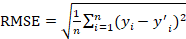 (1)
(1)
Mean
Absolute Error (MAE) calculates the average of the absolute errors between the
actual and predicted values.
 (2)
(2)
R²
(Coefficient of Determination): A statistical indicator that shows the
proportion of variance in the target to be predicted that is explained by the
input variables in the model.
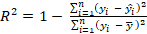 (3)
(3)
Where yi is the actual value and  is
predicted value,
is
predicted value,  is
the average of the actual values.
is
the average of the actual values.
The
dataset used for the model consists of experimental data, with the fuel main
fuel injection quantity as the target output. Each measured output corresponds
to a specific set of control parameters, including test pressure (bar),
injector holding time (µs), injection frequency (Hz), and test operating modes
(CH1 represents the low-speed condition, CH2 corresponds to the medium-speed
condition, CH3 refers to injector testing under pilot injection mode, and CH4
denotes the high-speed condition).
A
total of 456 experimental data points were obtained, and their distribution is
illustrated in Figure 2. The dataset used in this study was divided into
subsets for training and validating the ANN and GBM models. Specifically, 80%
of the data (364 samples) were allocated for model training to enable the
models to learn the underlying patterns in the output distribution, while the
remaining 20% of the data (92 samples) were reserved for validation to evaluate
the prediction accuracy of the developed models.
Before
being introduced into the models, the dataset was standardized after the data
splitting process in order to improve model stability and enhance training
performance. All normalization parameters were determined exclusively from the
training dataset and subsequently applied to the validation dataset to ensure
that data leakage did not occur. For the numerical input variables,
including test pressure, injector holding time, and injection frequency, the
data were standardized using the StandardScaler
method to ensure numerical consistency among the features. The operating modes
(CH1-CH4) were treated as categorical variables and encoded using OneHotEncoder prior to model training.
To
determine the optimal hyperparameter configurations for the ANN and GBM models,
the Grid Search method was employed in this study. This process was
carried out by systematically evaluating multiple combinations of
hyperparameters within a predefined search space in order to identify the
configuration that provided the best predictive performance. The optimal
parameter sets were selected based on the validation results using prediction
accuracy and error evaluation metrics of the developed models.
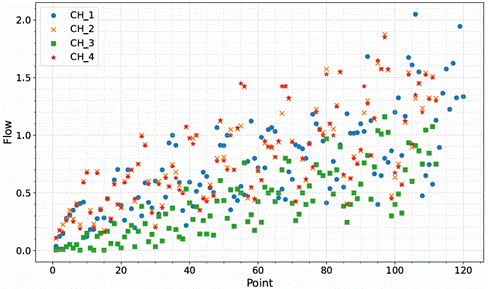
Fig. 2.
Experimental results
Tab. 1
Hyperparameter
configuration and optimal values of the ANN model
|
Model |
Hyperparameter |
Candidate values |
Optimal value |
|
ANN |
Hidden layer sizes |
[(50,30),
(64,32), (80,20), (128,64)] |
(80,20) |
|
Activation
function |
['relu', 'tanh', 'identity'] |
'relu' |
|
|
Solver |
['sgd', 'adam', 'lbfgs'] |
'adam' |
|
|
Learning rate |
[0.1, 0.01,
0.001] |
0.001 |
|
|
Maximum iterations |
[200, 500,
1000, 1500] |
1000 |
Tab. 2
Hyperparameter
configuration and optimal values of the GBM model
|
Model |
Hyperparameter |
Candidate values |
Optimal value |
|
GBM |
Number of
estimators |
[50, 100,
200] |
200 |
|
Learning rate |
[0.1, 0.01,
0.001] |
0.1 |
|
|
Maximum depth |
[3, 4, 5,
6] |
4 |
|
|
Minimum samples split |
[2, 5, 10] |
2 |
|
|
Minimum samples leaf |
[1, 2, 4] |
1 |
|
|
Subsample
ratio |
[0.6, 0.8,
1.0] |
1.0 |
|
|
Loss function |
['squared_error', 'absolute_error', 'huber'] |
'squared_error' |
3. RESULTS AND DISCUSSION
During
the machine learning training process, the dataset was divided into two
subsets: 80% for training and 20% for testing. The training set was used to
develop the models, while the testing set was employed to evaluate
prediction accuracy and practical applicability. This data-splitting strategy
plays a crucial role in preventing overfitting, where the model memorizes the
training data instead of learning generalized patterns. Model performance was
evaluated on both datasets using the metrics R2, RMSE, and MAE.
Regression plots of the training and testing datasets were first analyzed to visualize the relationship between the actual
and predicted values for both ANN and GBM models. These plots provide an
intuitive assessment of model accuracy, where points closer to the diagonal
line Y=T indicate higher accuracy, and also facilitate the identification of
overfitting or underfitting. If the training data points closely follow the
diagonal while the testing data points are widely scattered, the model is
considered overfitted.
As
shown in Figure 3, for both ANN and GBM models, the data points in the training
and testing sets are distributed close to the diagonal line Y=T, indicating the
absence of overfitting. Both models demonstrate strong predictive capability
and maintain a good balance between training accuracy and generalization
performance, confirming their stability and reliability in modeling
the combustion process and ignition delay. However, a more detailed comparison
reveals that the GBM model exhibits a tighter clustering of data points around
the diagonal for both training and testing sets, with fewer outliers and lower
noise levels compared to ANN. In contrast, the ANN model shows greater
dispersion in the high-value region (1.5), indicating higher prediction
variability. This difference is more clearly illustrated in Figure 4.
|
|
|
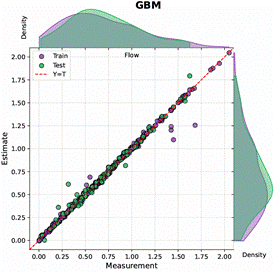
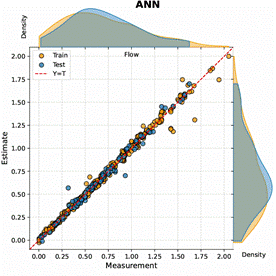
Fig.
3. Comparison between experimental and predicted values for the training and
test datasets obtained from the ANN and GBM models
From
Table 1, it can be observed that both the ANN and GBM models achieve very high
prediction performance. On the training dataset, the ANN model yields R²,
RMSE, and MAE values of 0.9908, 0.0406, and 0.0228, respectively, whereas the
GBM model provides better results with R² = 0.9926, RMSE = 0.0364, and MAE
= 0.0133. A quantitative comparison shows that the R² of GBM is higher
than that of ANN by 0.0018, corresponding to an improvement of
approximately 0.18%. Meanwhile, the RMSE of GBM is reduced by 0.0042 (about
10.3%) compared to ANN. Most notably, the difference is more pronounced in
terms of MAE, where GBM achieves a value of only 0.0133, which is 0.0095 lower
than ANN, representing a reduction of approximately 41.7%. These results
indicate that although both models learn the training data effectively, GBM
exhibits a clear advantage in reducing absolute errors, reflecting predictions
that are closer to the actual values. On the testing dataset, both ANN and GBM
maintain high accuracy with R² values greater than 0.98 and low error
levels, demonstrating good generalization capability. However, GBM continues to
outperform ANN across all three-evaluation metrics, achieving R² = 0.9835,
RMSE = 0.0487, and MAE = 0.0289. Specifically, the R² value of GBM is
approximately 0.08% higher than that of ANN, while the RMSE and MAE are
reduced by about 2.4% and 6.5%, respectively. Overall, these findings confirm
that the GBM model provides higher accuracy and superior generalization
performance compared to ANN in the main fuel injection quantity prediction
task.
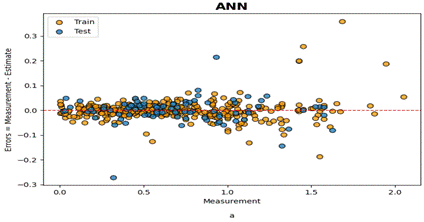
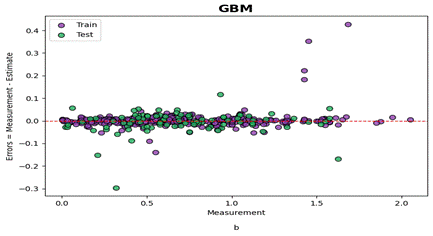
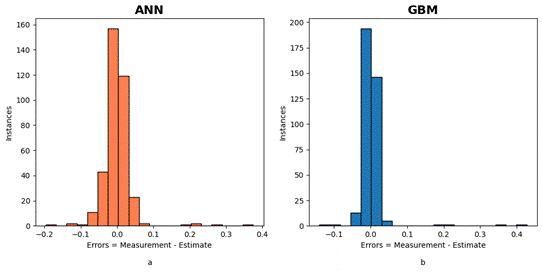
Fig. 4. Residual error distributions of the ANN and
GBM models
Figure 5 presents the quantitative comparison of the
error distributions (measurement − estimate) obtained from the ANN and
GBM models, offering a detailed interpretation of their predictive performance.
For both models, the error distributions are centered close to zero, with the
mean error remaining near zero, indicating that neither model exhibits a
significant systematic bias. This observation is consistent with the high
coefficients of determination (R² > 0.98) reported in Table 3,
confirming that both models accurately capture the relationship between the
input variables and the main fuel injection quantity. Nevertheless, notable
quantitative differences are observed in the dispersion of prediction errors.
The ANN model shows a wider error range, with most errors distributed
approximately between −0.20 and +0.35, whereas the GBM model exhibits a
more compact distribution, with the majority of errors concentrated within
approximately −0.05 to +0.05. This reduced spread directly explains the
lower RMSE achieved by GBM (0.0364) compared to ANN (0.0406), corresponding to
a reduction of about 10.3% on the training set. Similarly, the sharper
peak around zero for GBM indicates a lower average absolute deviation,
consistent with the MAE of 0.0133 for GBM versus 0.0228 for ANN, representing a
substantial reduction of approximately 41.7%.
Prediction Results of the Models
|
Pharse |
R² |
RMSE |
MAE |
|
|
ANN |
Train |
0.9908 |
0.0406 |
0.0228 |
|
Test |
0.9827 |
0.0499 |
0.0309 |
|
|
GBM |
Train |
0.9926 |
0.0364 |
0.0133 |
|
Test |
0.9835 |
0.0487 |
0.0289 |
Although both models display a
small number of positive-error outliers with magnitudes exceeding 0.25, the
occurrence frequency of such outliers is visibly lower for GBM than for ANN.
This difference further contributes to the improved robustness of GBM, as
reflected in its lower MAE and RMSE values. On the testing dataset, the same
trend is maintained, with GBM yielding lower RMSE (0.0487 vs. 0.0499) and
MAE (0.0289 vs. 0.0309), corresponding to reductions of approximately 2.4% and
6.5%, respectively. The quantitative analysis of the error distributions in
Figure 5 supports the numerical performance metrics reported in Table 3. While
both ANN and GBM provide highly accurate predictions, the GBM model
demonstrates a narrower error dispersion, fewer extreme deviations, and
consistently lower error magnitudes, thereby confirming its superior accuracy
and stronger generalization capability in main fuel injection quantity
prediction.
This visual observation is
quantitatively supported by the statistical indicators reported in Table 3. On
the test set, GBM achieves a higher coefficient of determination (R² =
0.9835) compared to ANN (R² = 0.9827), reflecting a stronger correlation
with the measured data. Moreover, the prediction errors of GBM are smaller,
with RMSE and MAE values of 0.0487 and 0.0289, respectively, which are lower
than those of ANN by approximately 2.4% (RMSE) and 6.5% (MAE). These reductions
indicate that GBM not only reduces large deviations but also improves overall
prediction consistency. The results shown in Figure 6 confirm that both ANN and
GBM are capable of accurately predicting main fuel injection quantity on unseen
data. Nevertheless, GBM demonstrates superior robustness and accuracy,
particularly in capturing sharp variations and extreme values, which is
consistent with its narrower error distribution and lower error metrics. This
further substantiates the conclusion that GBM provides improved predictive reliability
and generalization performance compared to ANN for main fuel injection quantity
estimation.
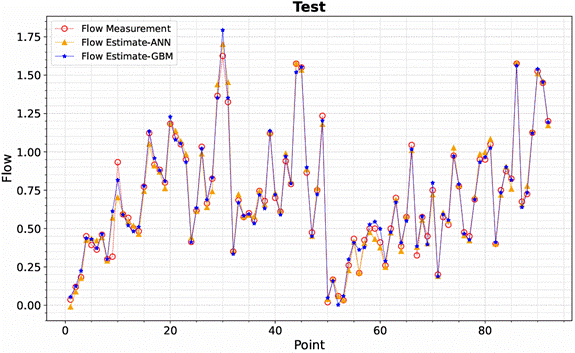
Fig. 6. The comparison between
the experimental main fuel injection quantity and
the values predicted by the ANN and GBM models on the testing dataset
4. CONCLUSION
This study
presented a comprehensive comparison between Artificial Neural Networks (ANN)
and Gradient Boosting Machines (GBM) for predicting the main fuel injection
quantity of a common rail diesel injector using experimental test bench data.
The results demonstrate that both models effectively capture the nonlinear
relationship between control parameters and main fuel injection quantity,
achieving high prediction accuracy with R² values exceeding 0.98 on both
training and testing datasets. A quantitative evaluation indicates that GBM
consistently outperforms ANN in terms of prediction error, with RMSE and MAE
reductions of up to 10.3% and 41.7% on the training dataset, and 2.4% and 6.5%
on the testing dataset, respectively. Furthermore, error distribution and
regression analyses reveal that GBM produces a narrower dispersion of
prediction errors with fewer extreme deviations, indicating more stable predictive performance on the
evaluated dataset and test conditions. Overall, the
findings suggest that GBM is a
promising data-driven approach for injector flow rate
prediction and diagnostic applications, contributing to reduced experimental
effort and development time while supporting advanced modeling of modern diesel
fuel injection systems.
Limitations
and Future Work: Despite the high prediction accuracy achieved, this study is
limited by the use of experimental data obtained from a single injector under
controlled test bench conditions, which may restrict model generalization to
different injector types and real-engine operating environments. In addition,
only the main injection event was considered, while multiple injection
strategies were not addressed. Moreover,
the present study compares only ANN and GBM models without including simpler
baseline approaches such as linear or polynomial regression. Future studies
should incorporate baseline statistical models to provide a more comprehensive
assessment of the relative advantages of advanced machine learning techniques
for injection flow rate prediction. Future work will focus on
extending the proposed models to multi-injection strategies, validating their
performance under real engine conditions, and incorporating uncertainty
quantification and real-time implementation to enhance practical applicability.
References
1.
Costagliola
M.A., M. Costabile, M.V. Prati. 2018. “Impact of road grade on real driving
emissions from two Euro 5 diesel vehicles”. Applied Energy 231: 586-593.
DOI: https://doi.org/10.1016/j.apenergy.2018.09.108.
2.
Schommers J., F. Duvinage, M. Stotz, A. Peters et al.
2000. “Potential of Common Rail Injection System for Passenger Car DI Diesel
Engines”. SAE Technical Paper 2000-01-0944. DOI: https://doi.org/10.4271/2000-01-0944.
3.
Gao Z., G. Li, H. Li, C. Xu, Y. Kang. 2021. “Experiment
investigation of injection parameters effects on injection stability of a high
pressure common rail system”. Scientific Progress 104(1): 1-20. DOI: https://doi.org/10.1177/0036850421992821.
4.
Xu R., F. Ma, L. Li, W. Yang, Y. Zhang. 2024. “Research on fuel injection characteristics of
common rail system based on high pressure pipeline integration and matching”. Energy
Science & Engineering 12(4): 1446-1461. DOI: https://doi.org/10.1002/ese3.1672.
5.
Mata C., V. Rojas-Reinoso, J.A. Soriano. 2023. “Experimental determination and modeling of fuel
rate of injection: A review”. Fuel 343: 127895. DOI: https://doi.org/10.1016/j.fuel.2023.127895.
6.
Lu X., J.
Zhao, V. Markov, L. Grekhov. 2025. “Deep transfer learning-based model for
real-time prediction of multiple injection rate in common rail system for
marine engine”. Energy 332: 137206. DOI: https://doi.org/10.1016/j.energy.2025.137206.
7.
Guan C.,
Y. Duan, J. Zhai, D. Han. 2019. “Hydraulic dynamics in split fuel injection on
a common rail system and their artificial neural network
prediction”. Fuel 255: 115792. DOI: https://doi.org/10.1016/j.fuel.2019.115792.
8.
Veza I., A. Afzal, M.A. Mujtaba, A. Tuan Hoang, D. Balasubramanian, M. Sekar, I.M.R. Fattah, M.E.M. Soudagar, A.I. EL-Seesy, D.W. Djamari, A.L. Hananto, N.R. Putra, N. Tamaldin. 2022. “Review of artificial neural networks for
gasoline, diesel and homogeneous charge compression ignition engine”. Alexandria
Engineering Journal 61(11): 8363-8391. DOI: https://doi.org/10.1016/j.aej.2022.01.072.
9.
Liu B.,
H. Fei, L. Wang, L. Fan, X. Yang. 2024. “Real-time estimation of fuel injection
rate and injection volume in high-pressure common rail systems”. Energy
298: 131386. DOI: https://doi.org/10.1016/j.energy.2024.131386.
10.
Samuel
M., V. GnanaMoorthi, P. Purushothaman, A. Gurusamy, G. Devaradjane. 2021.
“Prediction efficiency of artificial neural network for CRDI engine output
parameters”. Transportation Engineering 3: 100041. DOI: https://doi.org/10.1016/j.treng.2020.100041.
11.
Babu D., V. Thangarasu, A. Ramanathan. 2020.
“Artificial neural network approach on forecasting diesel engine
characteristics fuelled with waste frying oil biodiesel”. Applied Energy
263: 114612. DOI: https://doi.org/10.1016/j.apenergy.2020.114612.
12.
Vijayaraghavan
V., A. Garg, L. Gao. 2025. “Predicting the remaining useful life of
nickel-manganese-cobalt batteries using ensemble gradient boosting with
probabilistic estimation”. Journal of Energy Storage 135: 118374. DOI: https://doi.org/10.1016/j.est.2025.118374.
13.
Sharafati
A., S.B. Haji Seyed Asadollah, M. Hosseinzadeh. 2020. “The potential of new
ensemble machine learning models for effluent quality parameters prediction and
related uncertainty”. Process Safety and Environmental Protection 140:
68-78. DOI: https://doi.org/10.1016/j.psep.2020.04.045.
14.
Xu-Guang
T., S. Hai-Lang, Q. Tao, F. Zhi-Qiang, Y. Wen-Hui. 2012. “The impact of common
rail system's control parameters on the performance of high-power diesel”. Energy
Procedia 16(C): 2067-2072. DOI: https://doi.org/10.1016/j.egypro.2012.01.314.
15.
Gao Z.,
G. Li, M. Wang. 2021. “A calculation method and experiment study of
high-pressure common rail injection rate with solenoid injectors”. Proceedings
of the Institution of Mechanical Engineers, Part D: Journal of Automobile
Engineering 235(7): 1823-1835.
16.
Zhang H.,
Y. Li, Z. Chen, J. Wang. 2024. “Multi-Dimensional Global Temporal Predictive
Model for Marine Diesel Engines”. Journal of Marine Science and Engineering
12(8): 1370. DOI: https://doi.org/10.3390/jmse12081370.
17.
Willmott
C.J., K. Matsuura. 2005. “Advantages of the mean absolute error (MAE) over the
root mean square error (RMSE) in assessing average model performance”. Climate
Research 30(1): 79-82.
Received 09.01.2025; accepted in
revised form 18.05.2026

Scientific
Journal of Silesian University of Technology. Series Transport is licensed
under a Creative Commons Attribution 4.0 International License