Article
citation information:
Olawuyi,
O.S., Yusuf, T.G., Abdullateef, R.O. Airport infrastructure and the livelihood of
the host community. Scientific
Journal of Silesian University of Technology. Series Transport. 2026, 130, 179-194. ISSN: 0209-3324. DOI: https://doi.org/10.20858/sjsutst.2026.130.11
Olakunle Shakur
OLAWUYI[1],
Tajudeen Gbolahan YUSUF[2],
Ruqayyah Oritoke ABDULLATEEF[3]
AIRPORT
INFRASTRUCTURE AND THE LIVELIHOOD OF THE HOST COMMUNITY
Summary. Airports are
destinations where aircraft operate, and facilities such as runways, control
towers, terminals, and hangars directly serve aircraft, passengers, and cargo.
Airports are essential for moving human beings, goods, and services from one
local or international destination to another. They are usually the main entry
points for foreigners (expatriates or tourists) into a country. Hence, they
have the capacity to drive economic growth, provide employment, and boost trade
and tourism. This study aimed to examine the impact of airport infrastructure
on the livelihoods of community members in Alakia,
Ibadan. A descriptive research design was used for this study, and data were
collected from respondents using a questionnaire. The sample size for this
study was 384 respondents, as determined using Cochran's formula for the sample
size determination. Collected data were analyzed
using the statistical package for the social sciences (SPSS). This study
revealed that the local Airport in Alakia is
generally well perceived by community members. The fact that the Airport has
enhanced income-generating opportunities for the community members implies that
the community members will have increased savings and investments, which
ultimately can reduce poverty in the community. The Airport has yielded
significant infrastructural development in the community; for instance, roads
are being constructed and renovated, making it easy for more vehicles to access
the community.
Keywords: airport, social capital, financial capital, physical capital,
livelihood
1. INTRODUCTION
Transportation
is essential for moving human beings, goods, and services from one location to
another. Air transportation of different aircraft types is necessary for local,
regional, and international connectivity. Air transport is a critical sector
that allows individuals and goods to be transported because its speed gives it
an advantage over other transport modes (Adisasmita
& Caroles, 2021; Firmansyah et al., 2025). Airports are created for
aircraft to land, taxi, and take off. It is worth noting that the military
initially deployed and used aircraft. Based on the fact that it was faster than
other vehicles and as such it could ensure that human beings, goods and
services got to their desired destinations in real time, hence, it became
sought after and engaged by civilians. Augustyniak (2010) asserted that from
the onset, airports were essentially a component of national and military air
systems. However, after World War II, they gradually became a component under
state authorities and subsequently got enlarged for the use of civilians. It is
notable that, in addition to the fact that it offers speed and timely arrival
or delivery, it also provides comfort. Adamík and Kazda (2022) noted that the
first flight of the Wright brothers in 1903 made air transport known, and it
established the concept of engaging aircraft for comfortable as well as fast
travel. It has thus grown significantly and become one of the most profitable
industries. Boc et al. (2023) noted that the aviation industry remains one of
the fastest-growing and most profitable sectors on the global scene.
Mustaman et al. (2020)
noted that one of the significant advantages of air transportation is its high
speed compared to other transport vehicles. The fact that air transport and
airports facilitate the delivery of services between one region/nation and
another implies that it has significantly contributed to the growth and
development of different business endeavors. Sanusi
& Ezra (2020) opined that airports have become very important for various
businesses and industries, as they provide pertinent connections with respect
to air transport services to different organizations. It is of established
importance to all other sectors/industries, including tourism and hospitality.
Nguyen et al. (2022) asserted that the tourism and hospitality industry is
inextricably connected to the air transport services. Without air transport
routes between different islands and other areas, it would have been impossible
to access a lot of islands for tourism (Lohmann & Nguyen, 2011).
International airports are entry points for expatriates, foreign goods and
services, and tourists; hence, airports are essential for connecting a country
with the individuals and products of other countries. Mustaman
et al. (2020) noted that airports are points of entry for international and
local investors as well as tourists that will drive the economic trajectory of
a region. In simple terms, airports are germane for the development of the
economy of a country or region because they facilitate the arrival of business
investors from different areas. With respect to shaping the economic trajectory
of a community, airports have been significantly useful (Firmansyah et al.,
2025). It is pertinent to note that previous studies didn't focus on airport
infrastructure and the livelihood of the host community in Alakia,
Ibadan, Nigeria, which this study sought to examine. The objectives examined
for this study were: examine community members' perception of airport
infrastructure; financial capital of well-being; physical capital of
well-being; and social capital of well-being.
2. LITERATURE REVIEW
2.1. People's
perception of airport infrastructure
An
airport's infrastructure consists of the facilities that constitute the make-up
of a typical airport. Augustyniak (2010) noted that the essential constituents
of airport infrastructures are runways, taxiways, aprons, passengers, and cargo
terminals. Tsutskarev & Pegin
(2021) opined that the enhancement of aircraft ground handling infrastructure
has resulted in expanding parking spaces in aircraft sheds, repairs,
maintenance of different types of aircraft, external and internal aircraft
cleaning, and so on. These infrastructures facilitate the take-off and landing
of aircraft. Communities located close to airports have their perception of the
airports and their infrastructure. These perceptions can either be negative or
positive. Generally, airports facilitate the employment of people living very
close to airports. Relógio & Tavares (2024) noted
that the airline industry on the global scene spins an impressive number of
financial engagements capable of influencing employment and economic
development. Fu et al. (2021) opined that the aviation sector positively
impacts its immediate metropolitan and regional economy by enhancing population
growth and employment opportunities. Firmansyah et al. (2025) opined that the
direct socio-economic impacts of an airport include the creation of employment,
which could have direct or indirect influence on goods and services, financial
transactions, and the development of infrastructures. Airports naturally
attract construction activities and development of areas/communities where they
are sited, thereby fostering infrastructural development in the community. In
the same vein, airports attract different businesses and organizations to a
location, so that the businesses/organizations can meet the demands of
travellers using airports. Therefore, airports easily facilitate the
development of communities where they are domiciled and the communities close
to them. Tang et al. (2021) asserted that airports are connected to regional
development in contemporary times, mainly premised on the fact that an
enhancement of the link between airport infrastructure and the region
facilitates the coordination of the growth of such areas. Based on the
multiplier effects that they have, airports have the capacity to contribute
significantly to the dynamic economic development of cities as well as regions,
mainly because they are an integral component of public transport with respect
to their direct link with local transport, railways, and highways (Augustyniak,
2010).
Regarding
the negative impact of airports, the noise of aircraft when they take off has
been an issue that people living close to airports complain about. Part of the
significant adverse impacts of airports is the noise of aircraft, which has
been a primary source of noise pollution in the communities close to the
Airport and has thus affected different human engagements, such as education,
residencies, medical engagements, amongst others negatively (Raimi &
Ihuoma, 2019). The adverse impact of the aviation sector on society is
numerous. It includes noise pollution of aircraft during the take-off and
landing process, as well as waste creation and energy consumption (Chourasia et
al., 2021). Nguyen et al. (2022) noted that there have been criticisms of airport
infrastructures, precisely, concerning their influence on social and
biophysical environments.
2.2. Livelihood
of host communities
Pour
et al. (2018) asserted that different scholars have described livelihood as a
concept; hence, different templates have been established by various
international institutions, including the Food and Agriculture Organization
(FAO), United Nations Development Program (UNDP), and Department for
International Development (DFID), to expand its definition, indices and
boundaries. Ijeomah (2012) noted that the concept of
livelihood implies the capacities, assets (including social and material
assets), and engagements necessary for living. Livelihood comprises
individuals, their capacities, as well as means of gaining a living, including
meals, incomes, and their assets (Roche 2007; Daukere
et al., 2025). Livelihood, simply in a literal context, implies the ways,
capacities, and activities needed for securing the necessary things of life,
for instance, ways of survival (Lekshmi 2024; Chambers & Conway, 1992).
Livelihood is composed of assets or capital, defining and describing human
survival. Capitals are essentially the significant livelihood indices that make
up a balanced and strong human well-being (Tawsif et al., 2024). Zhao et al.
(2025) opined that, on the contrary, livelihood assets provide financial
stability and a feeling of security, thereby fostering relocated family members
to maintain a stable livelihood in their new environment. Economic stability is
a requirement for social cohesion, and it helps reduce social exclusion and
marginalization due to financial hardship (Mallick et al., 2020). Zhao &
Lan (2023) asserted that livelihood assets are closely associated with poverty
because they could help determine the capacity of family members to increase
their income levels.
Hence,
livelihood assets are necessary for the sustenance of people living in an
area/community/region. Lekshmi (2024) opined that livelihood assets are
essentially the platforms on which households build their lives; hence, they
are necessary to reduce stress and shocks. These assets could be tangible or
intangible; however, each has different means of making human lives better and
richer. Baumann & Sinha (2001) asserted that the five livelihood assets
usually make up the building blocks of livelihood and can be connected to a
reasonable extent. Zhao et al. (2025) opined that livelihood assets could be
referred to as different resources that farm owners possess to reduce external
risks, ensure survival, and improve and develop the standard of living. Livelihood
assets could be in material or immaterial forms, and the assets can be
classified into six (6) types, namely: 1) Natural assets, for instance. Lands,
mangroves, reef habitats, and so on. 2) Social assets, such as social networks
and trading networks. 3) Political assets, for instance, connectivity with
those holding political power. 4) Financial assets: savings, loans, credits,
cattle, and so on. 5) Human assets, such as skill sets, knowledge, education,
medical status, and so on (Roche, 2007; Pradhan et al., 2020). Human, social,
physical, financial, and natural assets are parameters used in measuring
livelihood assets that can influence household choices of different livelihood
strategies (Pour et al., 2018). Tawsif et al. (2024) state that human capital
includes leadership potential, capacity to work under adverse conditions,
medical status, skill set, knowledge, and experiences. Noted that financial
assets are the assets that individuals engage in to accomplish their set
targets. Human capital can be made stronger through the involvement of the best
individuals with the requisite skillsets to develop an organization's
performance (Santos, 2023). Usman & Wirawan (2021) asserted that physical
assets include essential producers' goods and infrastructures necessary to
sustain livelihoods that also require supervision to improve financial
conditions. Sharma et al. (2020) opined that natural capital is made up of
indivisible capitals engaged directly for producing intangible general goods,
such as the environment and biodiversity, for instance, land, trees, ponds,
irrigation systems, and so on. Meanwhile, the indicators of social capital are
network connections, membership of professional groups, associations, and
beliefs, amongst others (Craig et al., 2022).
2.3. Theory of
Sustainable Livelihood Framework
Ashagrie (2021)
asserted that sustainable livelihoods approaches (SLAs) were developed in the
1980s by different development agencies as well as corporations, which have
gained acceptance and engagement, specifically since the 1990s, by a lot of
scholars, because it is a framework that addresses developmental and poverty
issues. The sustainable livelihood approach is a template engaged by
researchers for the description of the context of livelihoods of community
members, although social assets are essentially the primary assets of cultured
communities (Gibbens & Cilliers, 2022; Li & Xi, 2019). The sustainable
livelihood framework is structured based on the constituents of capitals (also
called assets by some scholars), which are needed for supporting decent and
sustainable living conditions for human beings (Jackson, 2021). The framework
is established to reinforce the narratives that underscore good living
conditions, primarily through reduced poverty, infrastructural development, and
social connectivity, irrespective of associated vulnerabilities. The
sustainable livelihood framework provides people with the major variables
capable of affecting their livelihoods and interconnections amongst them (Ashagrie, 2021). Jackson (2021) asserted that the
sustainable livelihood framework established by corporations such as the
Department for International Development (DFID) has shown comprehensive
engagement of capital/asset acquisition modalities that could support decent
living conditions for human beings in their environments. Notably, some level
of vulnerabilities that can hinder the engagement of livelihood frameworks must
be considered. Issues of vulnerability are evident in the sustainable
livelihood framework. They are inclusive of shocks (unplanned disasters, wars,
financial trauma, health challenges), trends (population, resources, economy),
as well as seasonality (periodic price fluctuations, production, medicals, and
job offers) (Jackson, 2021; Ashagrie, 2021).
Therefore, it is pertinent for community members to exhibit resilience. In
relation to the authentic state of life, resilience is conceptualized as a
major constituent of the sustainable livelihood, determining coping capacities
for external tensions and shocks (Thulstrup, 2015). This framework was established
for its practical implications, although it has now been very well engaged for
academic purposes. Morse (2025) noted that the sustainable livelihood approach
was essentially created for guiding development interventions; however, it has
also been involved in guiding research. With respect to the engagement of the
sustainable livelihood framework, it has helped in the planning and evaluation
of interventions for the improvement of the sustainable livelihood of
communities, and it has also been engaged in research for the provision of
theoretical backgrounds, or as a practical framework, to aid in planning for
data collection and analysis (Hogh-Jensen et al., 2009).
3. METHODOLOGY
3.1.
Description of study area
Ibadan
Airport is essentially a domestic airport and it is located in Alakia, Ibadan, Oyo State. Federal Airports Authority of
Nigeria (FAAN) (2025) noted that Ibadan Airport was commissioned in June, 1982
by the former Senate President, Joseph Wayas. The Airport has a single runway
and a small terminal building, providing basic facilities for passengers and
cargo operations. Alakia is a community in the Egbeda
Local Government Area of Oyo State, Nigeria. Alakia
is approximately 15 kilometers southwest of Ibadan
city center, the capital of Oyo State.
3.2. Research
Design
Research
design is a plan for collecting, analyzing, and
interpreting data to answer a research question. It's a strategy that
integrates the different parts of a study to ensure that the research problem
is thoroughly investigated. This study adopted a descriptive research design to
provide pertinent results vis-à-vis airport infrastructure and the
livelihood of community members in Alakia, Ibadan.
Slater & Hasson (2025) asserted that the target of descriptive research
design is anchored around providing insights into the characteristics or
phenomenon of the population being studied without establishing a causal
relationship. Descriptive research design deals with the detailed provision of
the content and structure of research objectives, especially with respect to
the aim of such research (Furidha, 2023). Descriptive
design explored the characteristics of a population; identified problems that
exist within a unit, an organization, or a population, or explored variations
in characteristics or practices between institutions or even countries.
3.3. Sample Size and Sampling Technique
The
sample size for this study is respondents, as determined using Cochran's
formula for the sample size determination (N = z²pq/e²) is 384
respondents. The convenience technique was used to select participants,
ensuring fair participation by giving each member of the population an equal
chance of being chosen. Golzar et al. (2022) opined that in convenience
sampling, researchers engage readily available and easy-to-access samples.
Ahmed (2024) noted that convenience sampling involves engaging the most accessible
population for data collection.
3.4. Research
Instrument
The
research instrument adopted in this research was a questionnaire. It was
divided into five sections. Section A was based on the respondents' personal
data, which included demographic information. Section B examined community
members' perception of airport infrastructure. Section C examined the financial
capital of livelihood at Alakia Airport. Section D
examined the physical capital of livelihood at Alakia
Airport, while Section E examined the social capital of livelihood at Alakia Airport. Section A was categorized as standard data,
and sections B, C, D, and E were classified as
ordinal data, ranked on a four-point Likert scale of strongly agree, agree,
disagree, and strongly disagree.
4. RESULTS
Figure
1 shows 39% of the respondents are male and 61% are female.

Fig. 1. Gender
of the respondents
Source:
Author’s Field Survey (2025)
Figure
2 shows that 44.8% of the respondents have lived in the study area for 1-15
years, 45.3% have lived in the study area for 16-30 years, and 9.9% of the
respondents have lived in the study area for 30 years and above.
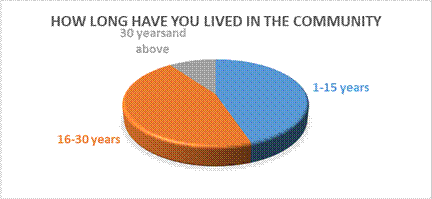
Fig. 2. How
long have you lived in the community
Source:
Author’s Field Survey (2025)
Table 1
shows that 33.3% of the respondents strongly agreed and 56% agreed that the
airport infrastructure at Alakia airport is
well-maintained. 60.2% strongly agreed, and 25.5% agreed that the airport
infrastructure has improved over the past 5 years. 52.9% strongly agreed, and
19% agreed that the airport infrastructure meets the community's needs. 62.8%
strongly agreed, and 25.5% agreed that the airport infrastructure provides
adequate safety and security measures. 38.3% strongly agreed, and 35.9% agreed that
the airport infrastructure has increased access to economic opportunities for
the community. The indicator for determining community members'
perception of airport infrastructure (8.75 ± 4.37) was rated based on their
mean and standard deviation. The airport infrastructure at the Airport is
well-maintained (1.81 ± 0.71), the airport infrastructure has improved over the
past 5 years (1.60 ± 0.87), the airport infrastructure meets the needs of the
community (1.89 ± 1.10), the airport infrastructure provides adequate safety
and security measures (1.54 ± 0.83), the airport infrastructure has increased
access to economic opportunities for the community (1.91 ± 0.86).
Tab. 1
Community members' perception of airport infrastructure
|
Statement |
SA |
A |
D |
SD |
Mean ±
SD |
|
The
airport infrastructure at the Airport is well-maintained |
128(33.3%) |
215(56%) |
28(7.3%) |
13(3.4%) |
1.81 ±
0.71 |
|
The
airport infrastructure has improved over the past 5 years |
231(60.2%) |
98(25.5%) |
32(8.3%) |
23(6.0%) |
1.60 ± 0.87 |
|
The
airport infrastructure meets the needs of the community |
203(52.9%) |
73(19%) |
56(14.6%) |
52(13.5%) |
1.89 ±
1.10 |
|
The
airport infrastructure provides adequate safety and security measures |
241(62.8%) |
98(25.5%) |
26(6.8%) |
19(4.9%) |
1.54 ± 0.83 |
|
The
airport infrastructure has increased access to economic opportunities for the
community |
147(38.3%) |
138(35.9%) |
86(22.4%) |
13(3.4%) |
1.91 ±
0.86 |
Source: Author’s Field Survey (2025)
The study
shows that 36.7% of the respondents strongly agreed, and 43%
agreed that Alakia Airport's presence has increased
the community's financial opportunities. 41.14% strongly agreed, and 43% agreed
that the Airport has increased savings and investments among community members.
12.5% of the respondents strongly agreed, and 34.4% agreed that the Airport
provides access to financial services such as loans and credit. 12.5% strongly
agreed, and 34.4% agreed that the Airport offers access to financial services
such as loans and credit. 46.6% of the respondents strongly agreed, and 35.7%
agreed that the Airport has increased income-generating opportunities for the
community. 51% of the respondents strongly agreed, and 31% agreed that the
Airport has reduced poverty levels in the community. The indicators for the
financial capital of livelihood (9.83 ± 4.49) were rated critically based on
their mean and standard deviation. The presence of Alakia
Airport has increased economic opportunities for the community (1.93 ± 0.92),
The Airport has led to an increase in savings and investments among community
members (1.84 ± 0.91), The Airport provides access to financial services such
as loans and credit (2.55 ± 0.89), The Airport has increased income-generating
opportunities for the community (1.79 ± 0.90), The Airport has reduced poverty
levels in the community (1.72 ± 0.87).
Tab. 2
Financial capital
of livelihood
|
Statement |
SA |
A |
D |
SD |
Mean ±
SD |
|
The
presence of Alakia Airport has increased financial
opportunities for the community |
141(36.7%) |
160(41.7%) |
50(13%) |
33(8.6%) |
1.93 ±
0.92 |
|
The
Airport has led to an increase in savings and investments among community
members |
159(41.4%) |
165(43%) |
24(6.3%) |
36(9.4%) |
1.84 ± 0.91 |
|
The
Airport provides access to financial services such as loans and credit |
48(12.5%) |
132(34.4%) |
148(38.5%) |
56(14.6%) |
2.55 ±
0.89 |
|
The
Airport has increased income-generating opportunities for the community |
179(46.6%) |
137(35.7%) |
40(10.4%) |
28(7.3%) |
1.79 ± 0.90 |
|
The
Airport has reduced poverty levels in the community |
196(51%) |
119(31%) |
50(13%) |
19(4.9%) |
1.72 ±
0.87 |
Source: Author’s Field Survey (2025)
The
study shows that 53.7% of the respondents strongly agreed, and 29.3% agreed
that the airport infrastructure has improved the condition of roads and
transportation in the area. 36.5% of respondents strongly agreed, and 19.3%
agreed that the Airport has increased access to equipment and machinery for
businesses and farmers. 53.9% of respondents strongly agreed, and 42.4% said
that the Airport has increased the number of vehicles and transportation
options in the area. 4.7% strongly agreed and 6.5% of respondents agreed that
the Airport has improved access to irrigation systems and agricultural
equipment for farmers. 50.3% strongly agreed and 42.7% agreed that the Airport
has increased the value of properties and land in the area. The indicators for
physical capital of livelihood (10.13 ± 3.85) were rated critically based on
their mean and standard deviation. The airport infrastructure has improved the
condition of roads and transportation in the area (1.63 ± 0.79), The Airport
has increased access to equipment and machinery for businesses and farmers
(2.16 ± 1.02), The Airport has led to an increase in the number of vehicles and
transportation options in the area (1.50 ± 0.58), The Airport has improved
access to irrigation systems and agricultural equipment for farmers (3.25 ±
0.78), The Airport has increased the value of properties and land in the area
(1.59 ± 0.68).
Tab. 3
Physical capital of livelihood
|
Statement |
SA |
A |
D |
SD |
Mean ±
SD |
|
The
airport infrastructure has improved the area's roads and transportation
conditions. |
209(53.7%) |
114(29.3%) |
54(13.9%) |
7(1.8%) |
1.63 ±
0.79 |
|
The
Airport has increased business access to equipment and machinery. |
140(36.5%) |
74(19.3%) |
138(35.9%) |
32(8.3%) |
2.16 ± 1.02 |
|
The
Airport has led to an increase in the number of vehicles and transportation
options in the area. |
207(53.9%) |
163(42.4%) |
13(3.4%) |
1(0.3%) |
1.50 ±
0.58 |
|
The
Airport has improved access to irrigation systems. |
18(4.7%) |
25(6.5%) |
183(47.7%) |
158(41.1%) |
3.25 ± 0.78 |
|
The
Airport has increased the value of properties and land in the area |
193(50.3%) |
164(42.7%) |
19(4.9%) |
8(2.1%) |
1.59 ±
0.68 |
Source: Author’s Field Survey (2025)
The
analysis revealed that 34.1% of the respondents strongly agreed, and 19.1%
agreed that the Airport has strengthened residents' social relationships and
community bonds. 24.7% strongly agreed and 28.1% agreed that the Airport has
increased community participation in decision-making. 40.6% of the respondents
strongly agreed and 36.9% agreed that the Airport has improved access to social
services and amenities for the community. 50.3% of the respondents strongly
agreed and 45.1% agreed that the Airport has increased the sense of community
pride and identity among residents. 53.1% of the respondents strongly agreed,
and 41.4% agreed that the Airport has fostered partnerships and collaboration
among community groups and organizations. The indicators for social capital of
livelihood (9.69 ± 4.42) were critically based on their mean and standard
deviation. The Airport has strengthened social relationships and community
bonds among residents (2.27 ± 1.08), The Airport has increased community
participation in decision-making processes (2.40 ± 1.04), The Airport has
improved access to social services and amenities for the community (1.90 ±
0.96), The Airport has increased the sense of community pride and identity
among residents (1.56 ± 0.64), The Airport has fostered partnerships and
collaborations among community groups and organizations (1.56 ± 0.70).
Tab. 4
Social capital of livelihood
|
Statement |
SA |
A |
D |
SD |
Mean ±
SD |
|
The
Airport has strengthened social relationships and community bonds among
residents. |
131(34.1%) |
73(19%) |
125(32.6%) |
55(14.3%) |
2.27 ±
1.08 |
|
The
Airport has increased community participation in the decision-making process. |
95(24.7%) |
108(28.1%) |
112(29.2%) |
69(18%) |
2.40 ± 1.04 |
|
The
Airport has improved access to social services and amenities for the
community. |
158(40.6%) |
143(36.8%) |
45(11.6%) |
38(9.9%) |
1.90 ±
0.96 |
|
The
Airport has increased the sense of community pride and identity among
residents. |
193(50.3%) |
173(45.1%) |
12(3.1%) |
6(1.6%) |
1.56 ± 0.64 |
|
The
Airport has fostered partnerships and collaboration among community groups
and organizations. |
204(53.1%) |
159(41.4%) |
8(2.1%) |
13(3.4%) |
1.56 ±
0.70 |
Source: Author’s Field Survey (2025)
5. DISCUSSION
It
is pertinent to record the community members' perception of the airport
infrastructure close to their community. Due to such infrastructure
development's wide-ranging social, economic, and environmental impacts, intense
debates may ensue as community members and other stakeholders present their
stances (London et al., 2021). A large percentage of the people who volunteered
to fill out the research instrument were females (61%). Notably, the
respondents have lived in the community for a long time; therefore, they have
good knowledge of events in the community. There is a general perception by
89.3% of the respondents that the airport infrastructure at Alakia
airport is well-maintained. Most respondents (85.7%) noted that the airport
infrastructure has improved over the past 5 years. An impressive percentage of
the respondents (71.9%) asserted that airport infrastructure meets the
community's needs. Almost all respondents (88.3%) noted that the airport
infrastructure provides adequate safety and security measures. The majority
(74.2%) opined that the airport infrastructure has increased access to economic
opportunities for the community. These perceptions are essential to deduce the
negative and positive impacts of the Airport, mainly because it is sited in an
urban area. When considering the sustainability of a city, it is vital to
engage the connection between airport master plans and urbanization plans (Galeote & Mestanza, 2020).
A
good number of the respondents (79.9%) asserted that the presence of Alakia Airport has increased financial opportunities for
the community. Most of the respondents (84.4%) noted that the Airport has
increased savings and investments among community members. About half of the
respondents (46.9%) noted that the Airport provides access to financial
services such as loans and credit. Almost all respondents (82.3%) noted that
the Airport has increased income-generating opportunities for the community.
Similarly, 82% of the respondents asserted that the Airport has reduced poverty
levels in the community. It can be generally stated that the Airport has
enhanced the financial livelihood of the community. Mustaman
et al. (2020) opined that airports play significant roles in strengthening
financial development. Monterrubio et al. (2020) noted that airports create
essential functions with respect to the development of economies of regions,
especially in connection to tourism. However, it is notable that airports are
not financial institutions; hence, they cannot offer financial services such as
loans. The fact that the Airport has created employment and ensured wealth
distribution implies that it has significantly contributed to poverty reduction
in the community. Tangibly, the breakdown of sustainable livelihood and
effective sustainable tourism reflects the impact of government policies,
multilateral initiatives, as well as strategies of non-governmental
organizations, which all significantly empower low-income family members and
reduce poverty in the community (Kiconco et al., 2025; Ijeomah,
2012).
A
good number of the respondents (83%) opined that the airport infrastructure has
improved the condition of roads and transportation in the area. A little above
half (55.8%) of the respondents asserted that the Airport has increased access
to equipment and machinery for businesses. Almost all of the respondents
(96.3%) asserted that the Airport has increased the number of vehicles and
transportation options in the area. A very small percentage (11.2%) of the
respondents opined that the Airport has improved access to irrigation systems.
On the contrary, almost all respondents (93%) noted that the Airport has
increased the value of properties and land in the area. The Airport has
facilitated infrastructural development in the community. The Airport has essentially
resulted in increased and improved community infrastructural development.
Notably,
social capital could be described as the resources available to persons and
groups in a community via social network membership (Álvarez & Romaní, 2017). About half of the respondents (53.2%) noted
that the Airport has strengthened social relationships and community bonds
among residents. Half of the respondents (52.8%) opined that the Airport has
increased community participation in decision-making. A very high percentage
(77.5%) of the respondents noted that the Airport has improved community access
to social services and amenities. Almost all respondents (95.4%) asserted that
the Airport has increased the sense of community pride and identity among
residents. Similarly, nearly all respondents (94.5%) opined that the Airport
has fostered partnerships and collaboration among community groups and
organisations. There is no gainsaying that the Airport is a beacon of hope and
a point of reference for pride for community members. It has thus fostered
enhanced social relationships and harmony among household members and the
community. For some people, the social capital of livelihood is the most
important because it can easily help connect with other forms of capital or
convert different forms of capital for productive use. Poor people can leverage
social assets such as relatives or kin-based security dynamics, especially when
financial assets are in short supply, or convert natural assets into financial
assets (Baumann & Sinha 2001; Pour et al., 2018).
Notably,
the local Airport at Alakia has positively impacted
the physical, financial, and social components of livelihood amongst the
community members. It could be inferred from the respondents' positions that
the Airport has established an interchangeable beneficial connection between the
three elements of livelihood examined for this study. This is corroborated by
the assertion of Baumann & Sinha (2001) that the have-nots could depend on
social capital (an example is their family members or kin-connected security
circles), specifically when there is a short supply of financial capital, or
perhaps convert physical capital into economic capital.
The
Airport has generally resulted in the development of Alakia
community and has also improved the lives of the community members. Augustyniak
(2010) noted that, apart from the fact that airports are connecting points
between travelers and air service transport
providers, they have also been responsible for developing the regions from
which they operate. Since livelihood capitals are premised on assuring
community members quality lives, Alakia Airport has
afforded community members quality lives. Mustaman et
al. (2020) opined that airports are parts of infrastructures capable of
enhancing the welfare of human beings and their quality of life. Notably, as
the engaged theory for this study, the sustainable livelihood framework has
confirmed that the Alakia community's economy has
been enhanced because of the employment that the Airport has created, obvious
infrastructural development, and social cohesion. In light of this study, the
theory de-emphasized the vulnerability components and emphasized its capital components.
6. CONCLUSION AND PRACTICAL IMPLICATIONS
The
local airport in Alakia is generally well-received by
community members. This is undoubtedly because the Airport has contributed
immensely to the development of the community. The fact that the Airport has
enhanced income-generating opportunities for the community members implies that
the community members will have increased savings and investments, which
ultimately can reduce poverty in the community. The Airport has yielded
significant infrastructural development in the community; for instance, roads
are being constructed and renovated, making it easy for more vehicles to access
the community. The infrastructural development has enhanced access to
social services and amenities. Undoubtedly, the community members have improved
their pride based on their sense of belonging and enhanced collaboration and
partnerships among community members, groups, and organizations.
Practically,
it is imperative for airport authorities and planners to maintain and improve
strong partnerships with host communities, especially with respect to the
facilitation of road rehabilitation/construction, and healthcare aids. Airport
authorities have to strengthen social relationships and establish an improved
bond with the host community. Policymakers should highlight the establishment
and expansion of airport facilities in a bid to catalyze
the social and economic development of host community. Community members should
further empower themselves through relevant training that will fortify them
with the skills to render relevant services to travelers
at the airport. This will further enhance their income generation and improve
their welfare.
References
1.
Adamík. J., A. Kazda. 2022. “Changes in
airport infrastructure were caused by the historical development of aircraft”. Papers
and Studies. University of Zilina. DOI:
https://doi.org/10.26552/pas.Z.2022.1.03.
2.
Adisasmita S., L. Caroles. 2021.
“Multi-Airport System Development Model: Case Study of Airports in Indonesia”. Civil
Engineering Journal 7: 182-193.
3.
Ahmed S. 2024. “How to choose a sampling
technique and determine sample size for research: A simplified guide for
researchers”. Oral Oncology Reports 12(100662): 1-7. DOI:
https://doi.org/10.1016/j.oor.2024.100662.
4.
Álvarez E., J.R. Romaní. 2017. “Measuring
social capital: further insights”. Gac. Sanit. 31: 57-61.
5.
Ashagrie E. 2021. “A theoretical and
analytical framework to the inquiry of sustainable land management practices”. International
Journal of Business and Economic Development 9(2): 25-39.
6.
Augustyniak W. 2010. “Privatization of
Airports as a Way for Air Infrastructure Development”. Journal of
International Studies 3(1): 136-44.
7.
Baumann P., S. Sinha. 2001. “Linking
development with democratic processes in India: Political capital and
sustainable livelihoods analysis”. Natural Resource Perspectives 68:
1-4.
8.
Boc K., I. Štimac, J. Pivac, M. Bračić.
2023. “An Empirical Investigation: Does New Airport Terminal Infrastructure
Improve the Customer Experience?” Sustainability 15(17). No 13188. DOI:
https://doi.org/10.3390/su151713188.
9.
Bogicevic V., M. Bujusic, A. Bilgihan, W.
Yang, C. Cobanoglu. 2017. “The impact of traveler-focused airport technology on
traveler satisfaction”. Technol. Forecast. Soc. Chang. 123: 351-361.
10.
Chourasia A., K. Jha, N. Dalei. 2021.
„Development and planning of sustainable airports”. Journal of Public
Affairs 21(1): e2145. DOI: https://doi.org/10.1002/pa.2145.
11.
Craig A., C.W. Hutton, J. Sheffield. 2022.
“Social capital typologies and sustainable development: spatial patterns in the
central and southern regions of Malawi”. Sustainability 14(15): 9374.
12.
Daukere B., F. Eniekezimene, E. Adeniyi,
B. Ademiloye. 2025. “Impact of Changing Livelihood Strategies of Host
Communities through Establishment of Universities: A Case
of Niger Delta University, Wilberforce Island, Bayelsa State, Nigeria”.
Journal of Colombo Geographer 3(1): 1-25.
13.
Federal Airports Authority of Nigeria
(FAAN).
2025. Available at: https://faan.gov.ng/local-airports/.
14.
Firmansyah C., B. Hamzah, S. Amin. 2025.
“Development in Airport Runway Expansion: The Rendani Airport Case Study,
Papua”. SSRG International Journal of Civil Engineering 12(3): 16-29.
DOI: https://doi.org/10.14445/23488352/IJCE-V12I3P102.
15.
Fu X., K.W. Hong Tsui, B. Sampaio, D. Tan.
2021. “Do airport activities affect regional economies? Regional analysis of
New Zealand's airport system”. Regional Studies 55(4): 707-722. DOI:
https://doi.org/10.1080/00343404.2020.1851359.
16.
Furidha B. 2023. “Comprehension of the
Descriptive Qualitative Research Method: A Critical
Assessment of the Literature”. Journal of Multidisciplinary Research
2(4): 1-8.
17.
Galeote L., J. Mestanza. 2020.
“Qualitative Impact Analysis of International Tourists and Residents'
Perceptions of Málaga-Costa Del Sol Airport”. Sustainability 12(11):
4725. DOI: https://doi.org/10.3390/su12114725.
18.
Gibbens M., J. Cilliers. 2022. “ECD
centres as change catalysts in sustainable rural livelihood development:
Griekwastad, South Africa, as case study”. In: Environment, Development and
Sustainability 25: 8857-8875.
19.
Golzar J., S. Noor, O. Tajik. 2022.
“Convenience Sampling: Sampling Method Descriptive Research”. International
Journal of Education and Language Studies 1(2): 72-77.
20.
Hogh-Jensen H., H. Egelyng, M. Oelofse.
2009. “Research in Sub-Saharan African food systems must address
post-sustainability challenges and increase developmental returns”. Sci.
Res. Essays 4: 647-651.
21.
Ijeomah H. 2021. “Impact of tourism on
livelihood of communities adjoining eco-destinations in plateau state,
Nigeria”. CULTUR 06(03): 55-71.
22.
Jackson E. 2021. “Sustainable Livelihood
Framework for Equitable Living in Crisis of Global Pandemic”. Munich
Personal RePEc Archive: 1-14. Available at:
https://mpra.ub.uni-muenchen.de/106951/1/MPRA_paper_106950.pdf.
23.
Kiconco M., A. Nelmapius, E. Venter, K.
Alinda. 2025. “Livelihood capital access and sustainable livelihood outcomes of
park adjacent communities in Uganda”. IIMBG Journal of Sustainable Business
and Innovation 3(2): 192-212. DOI:
https://doi.org/10.1108/IJSBI-06-2024-0029.
24.
Lekshmi S. 2024. “Livelihood Framework: A
Holistic Approach in Conceptualizing and Analysing Multi-dimensional Poverty”. Quest
Journals of Research in Humanities and Social Science 12(5): 95-99.
25.
Li C., Z. Xi. 2019. “Social stability risk
assessment of land expropriation: Lessons from the Chinese case”. International
Journal of Environmental Research and Public Health 16: 3952.
26.
Lohmann G., D. Nguyen. 2011. “Sustainable
tourism transportation in Hawaii: a holistic approach”. In: Island Tourism:
towards a Sustainable Perspective: 197-214. DOI:
https://doi.org/10.1079/9781845936792.0197.
27.
London W., G. Lohmann, D. Moyle. 2021.
“Network fragmentation and risk in cruise tourism infrastructure development:
Auckland, New Zealand”. Case Stud. Transport Pol. 9: 336-347.
28.
Monterrubio C., K. Andriotis, G.
Rodríguez-Muñoz. 2020. “Residents' perceptions of airport construction
impacts: A negativity bias approach”. Tourism Management 77: 1-29. DOI:
https://doi.org/10.1016/j.tourman.2019.103983.
29.
Morse S. 2025. “Having Faith in the
Sustainable Livelihood Approach: A Review”. Sustainability 17(2): 539.
DOI: https://doi.org/10.3390/su17020539.
30.
Mustaman S., F. Fahira, D. Nirmalawati.
2020. “Analysis of Factors that Affect to Infrastructure improvement of
Syukuran Aminuddin Amir Airport in Banggai District”. Paduraksa 9(2):
161-171. DOI: https://doi.org/10.22225/pd.9.2.1856.161-171.
31.
Nguyen D., G. Lohmann, M. Esteban. 2022.
“Airport infrastructure development in Ogasawara Islands Japan: A comparison of
media and public discourse analysis”. Journal of Air Transport Management
102(102220): 1-13. DOI: https://doi.org/10.1016/j.jairtraman.2022.102220.
32.
Pour M., A. Baratia, H. Azadib, J.
Scheffran. 2018. “Revealing the role of livelihood assets in livelihood
strategies: Towards enhancing conservation and livelihood development in the
Hara Biosphere Reserve, Iran”. Ecological Indicators 94: 336-347. DOI:
https://doi.org/10.1016/j.ecolind.2018.05.074.
33.
Pradhan S., V. Jallaraph, S. Naberia.
2020.
„A Review on Understanding the Sustainable Livelihood Security of Rural
Household in India”. International Journal of Current Microbiology and
Applied Sciences 11: 639-648.
34.
Raimi M., B. Ihuoma. 2019. “Impact of
Airport Noise on the Health Situation of Host Communities: A Case Study of
Obong Victor Attah International Airport, Akwa Ibom State, Nigeria”. SM
Journal of Public Health and Epidemiology 5(1): 1-8.
35.
Relógio A.T., F.O. Tavares. 2024.
“Perception of residents regarding the socio-economic and environmental impacts
of the Huambo Airport in Angola”. J. Environ. Manag. & Sust. 13(1):
e24361. DOI: https://doi.org/10.5585/2024.24361.
36.
Roche R. 2007. Section 1. Background.
Livelihoods approaches as a conservation tool: 1-24. Available at:
https://www.reefresilience.org/pdf/LivelihoodsApproachLongVersion.pdf.
37.
Santos A. 2023. “Human resources lens:
perceived performances of ISO 9001: 2015 certified service firms”. Int. J.
Hum. Capital Urban Manage. 8(2): 229-244.
38.
Sanusi A., A. Ezra. 2020. “Assessment of
Socio-economic Impact of Yola International Airporton Jimeta Residents, Adamawa
State, Nigeria”. LAUTECH Journal of Civil and Environmental Studies 5:
91-102. DOI: https://doi.org/10.36108/laujoces/0202/50(0111).
39.
Sharna S.C., M. Kamruzzaman, S.T.
Siddique. 2020. “Impact of improved chickpea cultivation on profitability and
livelihood of farmers: a case study of Qin Ba Mountain area in South-Shaanxi,
China”. J. Mountain Sci. 17(5): 1206-1220.
40.
Slater P.F., F. Hasson. 2025.
“Quantitative Research Designs, Hierarchy of Evidence and Validity”. Journal
of Psychiatric and Mental Health Nursing 32(3): 656-660. DOI:
https://doi.org/10.1111/jpm.13135.
41.
Tang K., H.J. Wang, N. Wang. 2021. “The
Relationship between the Airport Economy and Regional Development in China”. Emerging
Markets Finance and Trade 58(3): 1-11. DOI:
https://doi.org/10.1080/1540496X.2021.1911804.
42.
Tawsif S., S. Paul, M. Khan. 2024.
“Changing pattern of livelihood capitals of urban slum dwellers during COVID-19
pandemic”. International Journal of Human Capital in Urban Management
9(1): 101-118. Available at:
https://www.ijhcum.net/article_707648_54af51e2d781b6e4d9680c6939e9d0e1.pdf.
43.
Thulstrup A.W. 2015. “Livelihood
resilience and adaptive capacity: tracing changes in household access to
capital and central Vietnam”. World Dev. 74: 352-362. DOI:
https://doi.org/10.1016/j.worlddev.2015.05.019.
44.
Tsutskarev V., P. Pegin. 2021.
“Development of the aircraft ground handling infrastructure for business
aviation in the Arctic region”. Transportation Research Procedia 57:
704-710. DOI: https://doi.org/10.1016/j.trpro.2021.09.103.
45.
Usman A., H. Wirawan. 2021. “The effect of
human capital and physical capital on regional financial condition: the
moderating effect of management control system”. Heliyon 7(5): 1-10.
46.
Zhao X., F. Lan. 2023. “The Impact of
Livelihood Capital Endowment on Household Poverty Alleviation: The Mediating
Effect of Land Transfer”. Land 12(7): 1346. DOI:
https://doi.org/10.3390/land12071346.
47.
Zhao C., M. Tang, C. Wang. 2025. “The
impact of livelihood capital on the social integration of relocated households:
mediating effects based on livelihood risk”. Frontiers in Sustainable Food
Systems 9(1537141): 1-13. DOI: https://doi.org/10.3389/fsufs.2025.1537141.
Received 26.10.2025; accepted in revised form 14.02.2026

Scientific Journal of Silesian
University of Technology. Series Transport is licensed under a Creative
Commons Attribution 4.0 International License